Select options
This product has multiple variants. The options may be chosen on the product page
$19.00–$400.00Price range: $19.00 through $400.00
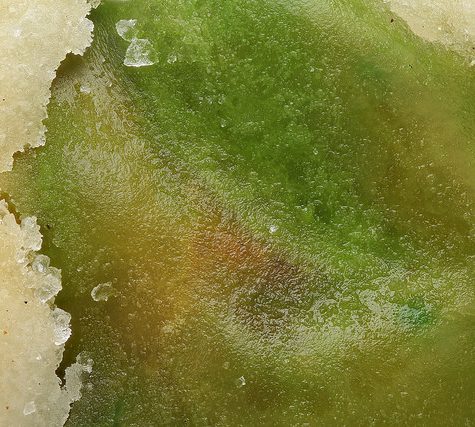
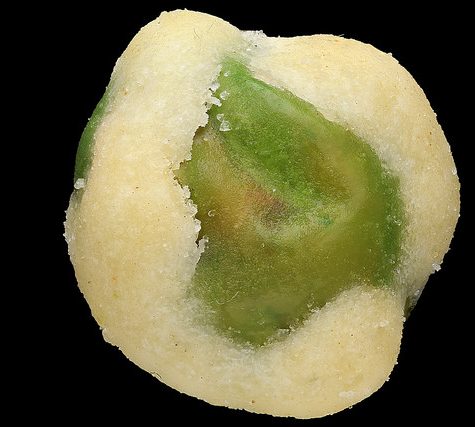
Wasabi Pea
Wasabi (ワサビ or わさび(山葵), earlier 和佐比; Eutrema japonicum or Wasabia japonica)[1] is a plant of the Brassicaceae family, which includes cabbages, horseradish, and mustard. It is also called Japanese horseradish,[2] although horseradish is a different plant (which is generally used as a substitute for wasabi, due to the scarcity of the wasabi plant). Wasabi is generally used as a sauce that makes sushi or other foods more flavorful by adding spice. Its stem is used as a condiment and has an extremely strong pungencymore akin to hot mustard than the capsaicin in a chili pepper, producing vapours that stimulate the nasal passages more than the tongue. The plant grows naturally along stream beds in mountain river valleys in Japan. The two main cultivars in the marketplace are E. japonicum ‘Daruma’ and ‘Mazuma’, but there are many others.[3] The origin of wasabi cuisine has been clarified from the oldest historical records; it takes its rise in Nara prefecture,[4] and more recently has seen a surge in popularity from the early 1990s to mid 2000s.[5]
Select options
This product has multiple variants. The options may be chosen on the product page
$19.00–$400.00Price range: $19.00 through $400.00
Wasabi Pea
Wasabi (ワサビ or わさび(山葵), earlier 和佐比; Eutrema japonicum or Wasabia japonica)[1] is a plant of the Brassicaceae family, which includes cabbages, horseradish, and mustard. It is also called Japanese horseradish,[2] although horseradish is a different plant (which is generally used as a substitute for wasabi, due to the scarcity of the wasabi plant). Wasabi is generally used as a sauce that makes sushi or other foods more flavorful by adding spice. Its stem is used as a condiment and has an extremely strong pungencymore akin to hot mustard than the capsaicin in a chili pepper, producing vapours that stimulate the nasal passages more than the tongue. The plant grows naturally along stream beds in mountain river valleys in Japan. The two main cultivars in the marketplace are E. japonicum ‘Daruma’ and ‘Mazuma’, but there are many others.[3] The origin of wasabi cuisine has been clarified from the oldest historical records; it takes its rise in Nara prefecture,[4] and more recently has seen a surge in popularity from the early 1990s to mid 2000s.[5]

 Diffuser for Canon M-PE 65mm 1-5x
 Rotary Stage for Manual Micro/Macro 3D Imaging
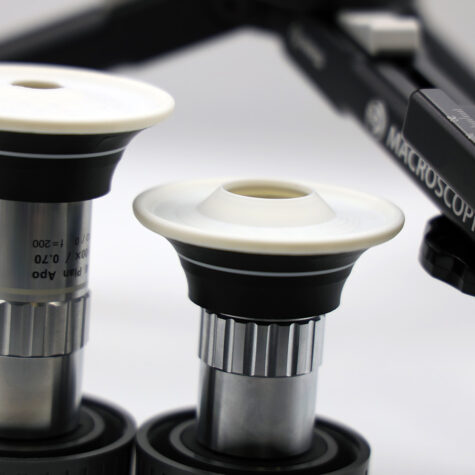 Diffuser for Mitutoyo M Plan APO Objectives