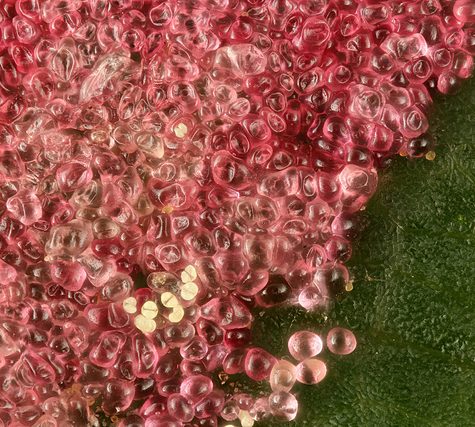
Erineum galls on a maple leaf, produced by Eriophyidae mites
Galls or cecidia are a kind of swelling growth on the external tissues of plants or animals. Plant galls are abnormal outgrowths[1] of plant tissues, similar to benign tumors or warts in animals. They can be caused by various parasites, from fungi and bacteria, to insects and mites. Plant galls are often highly organized structures and because of this the cause of the gall can often be determined without the actual agent being identified. This applies particularly to some insect and mite plant galls. The study of plant galls is known as cecidology.
Select options
This product has multiple variants. The options may be chosen on the product page
Select options
This product has multiple variants. The options may be chosen on the product page
$19.00–$400.00Price range: $19.00 through $400.00
Engorged Dog Tick
Dermacentor variabilis, also known as the American dog tick or wood tick, is a species of tick that is known to carry bacteria responsible for several diseases in humans, including Rocky Mountain spotted fever and tularemia (Francisella tularensis). It is one of the most well-known hard ticks. Diseases are spread when it sucks blood from the host, which could take several days for the host to experience some symptoms.
Select options
This product has multiple variants. The options may be chosen on the product page
Select options
This product has multiple variants. The options may be chosen on the product page
$19.00–$400.00Price range: $19.00 through $400.00
Engorged Dog Tick
Dermacentor variabilis, also known as the American dog tick or wood tick, is a species of tick that is known to carry bacteria responsible for several diseases in humans, including Rocky Mountain spotted fever and tularemia (Francisella tularensis). It is one of the most well-known hard ticks. Diseases are spread when it sucks blood from the host, which could take several days for the host to experience some symptoms.
Select options
This product has multiple variants. The options may be chosen on the product page
$19.00–$400.00Price range: $19.00 through $400.00
Engorged Dog Tick
Dermacentor variabilis, also known as the American dog tick or wood tick, is a species of tick that is known to carry bacteria responsible for several diseases in humans, including Rocky Mountain spotted fever and tularemia (Francisella tularensis). It is one of the most well-known hard ticks. Diseases are spread when it sucks blood from the host, which could take several days for the host to experience some symptoms.
Select options
This product has multiple variants. The options may be chosen on the product page

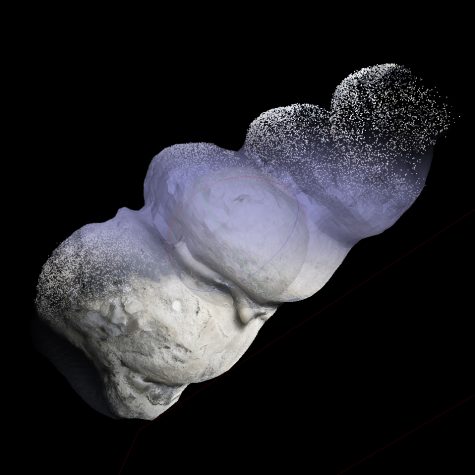 Internal Mold of a Turretellid Gastropod: Fossil
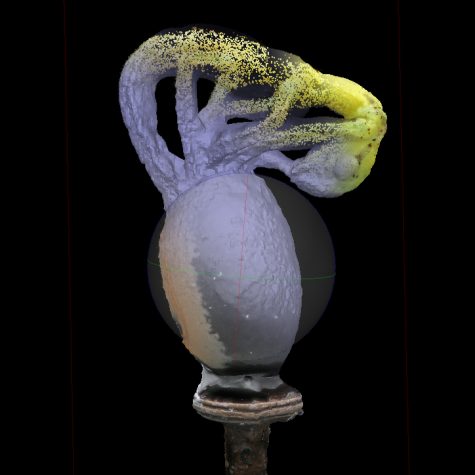 Hatching Stick Insect
 Corylus americana, Leaf Texture from Fenton River
 Diffuser for Canon M-PE 65mm 1-5x