Select options
This product has multiple variants. The options may be chosen on the product page
$19.00–$400.00Price range: $19.00 through $400.00
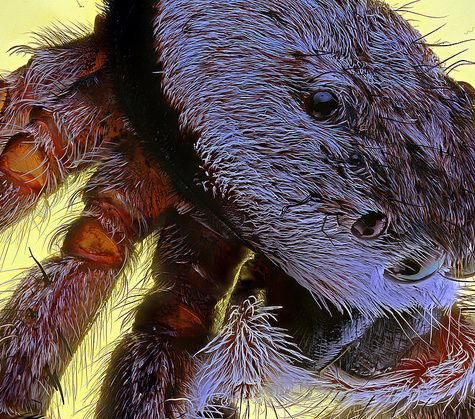
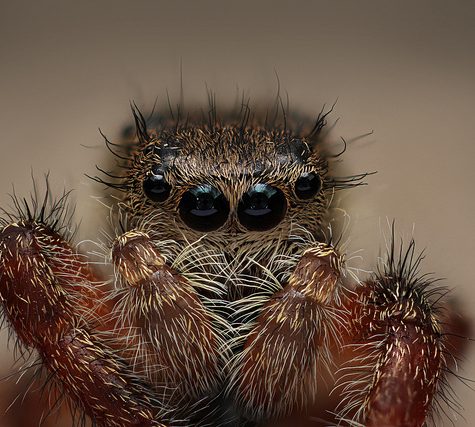
Salticidae
The jumping spider family (Salticidae) contains over 600 described genera and more than 5800 described species,[1] making it the largest family of spiders with about 13% of all species.[2] Jumping spiders have some of the best vision among arthropods and use it in courtship, hunting, and navigation. Although they normally move unobtrusively and fairly slowly, most species are capable of very agile jumps, notably when hunting, but sometimes in response to sudden threats or crossing long gaps. Both their book lungsand tracheal system are well-developed, and they use both systems (bimodal breathing). Jumping spiders are generally recognized by their eye pattern. All jumping spiders have four pairs of eyes, with the anterior median pair being particularly large.
Select options
This product has multiple variants. The options may be chosen on the product page
$19.00–$400.00Price range: $19.00 through $400.00
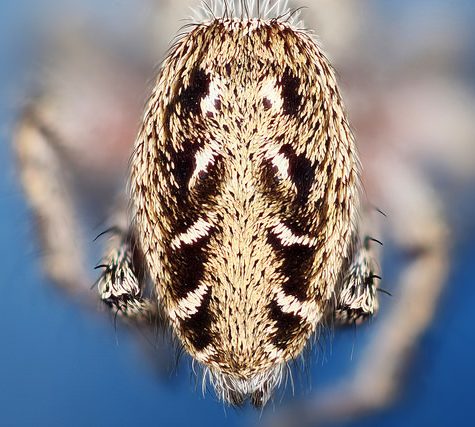
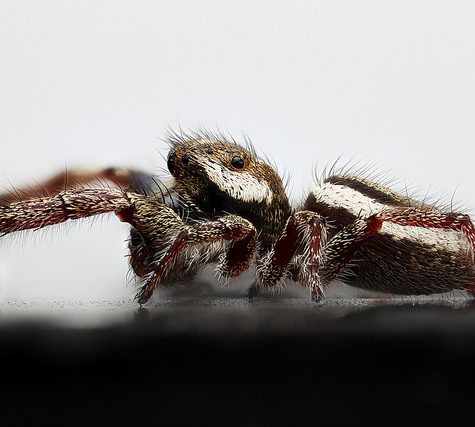
Salticidae Abdomen
The jumping spider family (Salticidae) contains over 600 described genera and more than 5800 described species,[1] making it the largest family of spiders with about 13% of all species.[2] Jumping spiders have some of the best vision among arthropods and use it in courtship, hunting, and navigation. Although they normally move unobtrusively and fairly slowly, most species are capable of very agile jumps, notably when hunting, but sometimes in response to sudden threats or crossing long gaps. Both their book lungsand tracheal system are well-developed, and they use both systems (bimodal breathing). Jumping spiders are generally recognized by their eye pattern. All jumping spiders have four pairs of eyes, with the anterior median pair being particularly large.
Select options
This product has multiple variants. The options may be chosen on the product page
$19.00–$400.00Price range: $19.00 through $400.00
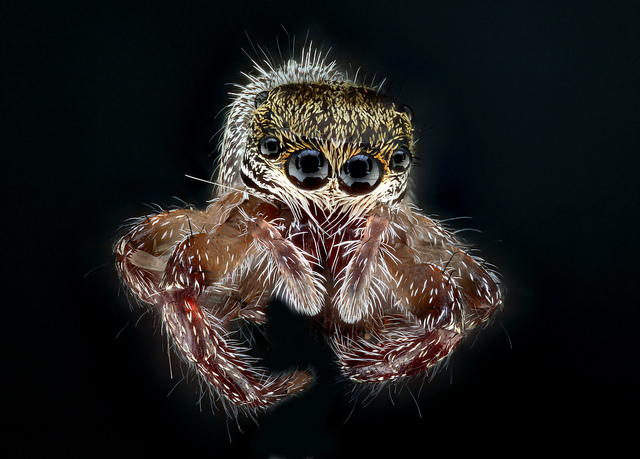
Salticidae
The jumping spider family (Salticidae) contains over 600 described genera and more than 5800 described species,[1] making it the largest family of spiders with about 13% of all species.[2] Jumping spiders have some of the best vision among arthropods and use it in courtship, hunting, and navigation. Although they normally move unobtrusively and fairly slowly, most species are capable of very agile jumps, notably when hunting, but sometimes in response to sudden threats or crossing long gaps. Both their book lungsand tracheal system are well-developed, and they use both systems (bimodal breathing). Jumping spiders are generally recognized by their eye pattern. All jumping spiders have four pairs of eyes, with the anterior median pair being particularly large.
Select options
This product has multiple variants. The options may be chosen on the product page
$19.00–$400.00Price range: $19.00 through $400.00
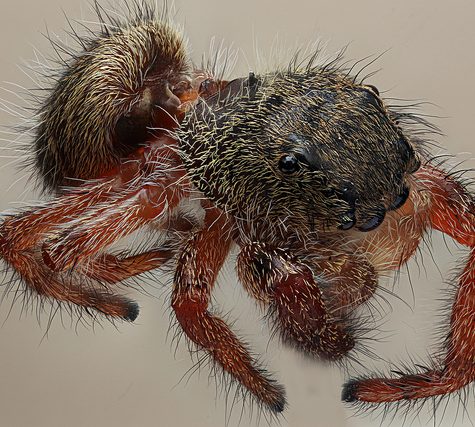
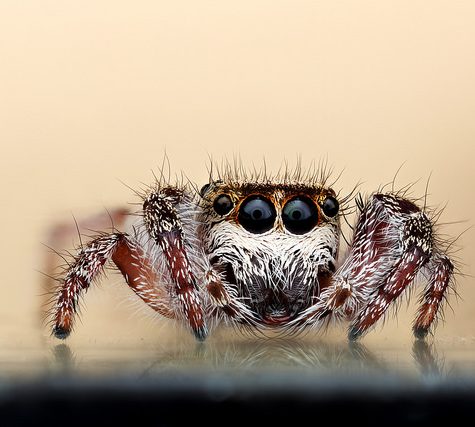
Phidippus princeps
Phidippus princeps is a rare species of jumping spider found in Canada and the United States. These jumping spiders’ vision exceeds by a factor of ten that of dragonflies, which have the best vision among insects.
Select options
This product has multiple variants. The options may be chosen on the product page
$19.00–$400.00Price range: $19.00 through $400.00
Phidippus princeps
Phidippus princeps is a rare species of jumping spider found in Canada and the United States. These jumping spiders’ vision exceeds by a factor of ten that of dragonflies, which have the best vision among insects.
Select options
This product has multiple variants. The options may be chosen on the product page
$19.00–$400.00Price range: $19.00 through $400.00
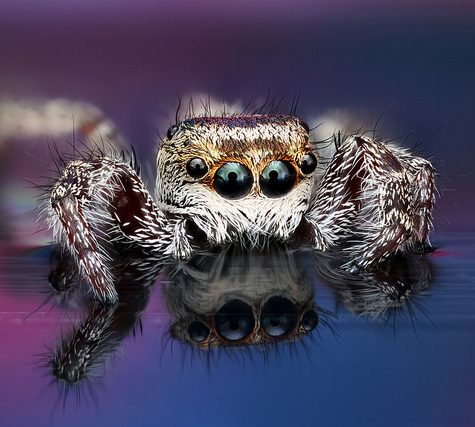
Phidippus princeps on Water
Phidippus princeps is a rare species of jumping spider found in Canada and the United States. These jumping spiders’ vision exceeds by a factor of ten that of dragonflies, which have the best vision among insects.
Select options
This product has multiple variants. The options may be chosen on the product page
$19.00–$400.00Price range: $19.00 through $400.00
Salticidae
The jumping spider family (Salticidae) contains over 600 described genera and more than 5800 described species,[1] making it the largest family of spiders with about 13% of all species.[2] Jumping spiders have some of the best vision among arthropods and use it in courtship, hunting, and navigation. Although they normally move unobtrusively and fairly slowly, most species are capable of very agile jumps, notably when hunting, but sometimes in response to sudden threats or crossing long gaps. Both their book lungsand tracheal system are well-developed, and they use both systems (bimodal breathing). Jumping spiders are generally recognized by their eye pattern. All jumping spiders have four pairs of eyes, with the anterior median pair being particularly large.
Select options
This product has multiple variants. The options may be chosen on the product page
$19.00–$400.00Price range: $19.00 through $400.00
Phidippus princeps
Phidippus princeps is a rare species of jumping spider found in Canada and the United States. These jumping spiders’ vision exceeds by a factor of ten that of dragonflies, which have the best vision among insects.
Select options
This product has multiple variants. The options may be chosen on the product page
$19.00–$400.00Price range: $19.00 through $400.00
Phidippus princeps
Phidippus princeps is a rare species of jumping spider found in Canada and the United States. These jumping spiders’ vision exceeds by a factor of ten that of dragonflies, which have the best vision among insects.

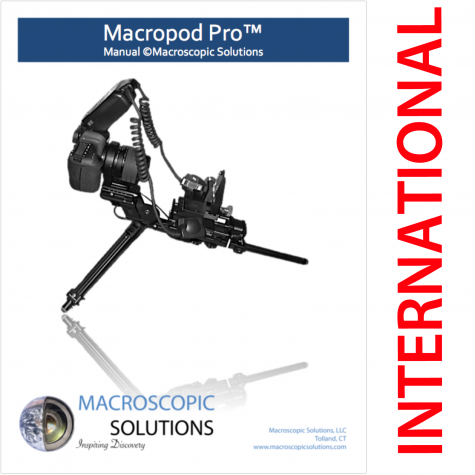 International, Hawaii and Alaska Training & Support
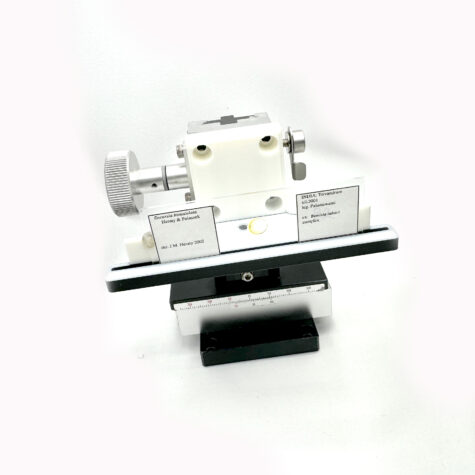 Slide Stage compatible with X, Y Rack-Pinion and Universal Mount
 Corylus americana, Leaf Texture from Fenton River
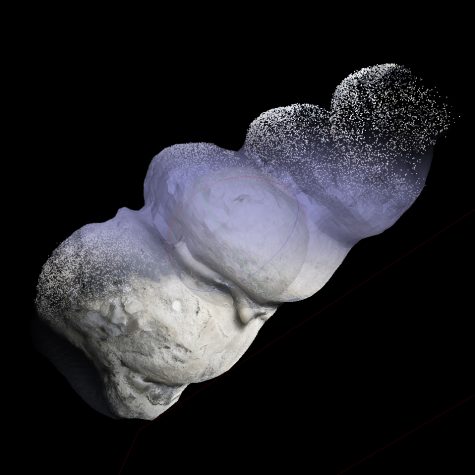 Internal Mold of a Turretellid Gastropod: Fossil
 EOS R3
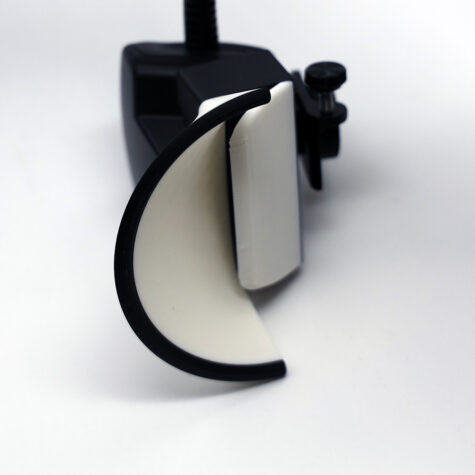 Turtledove Diffusers: MT-26EX-RT Twin Lite Flash
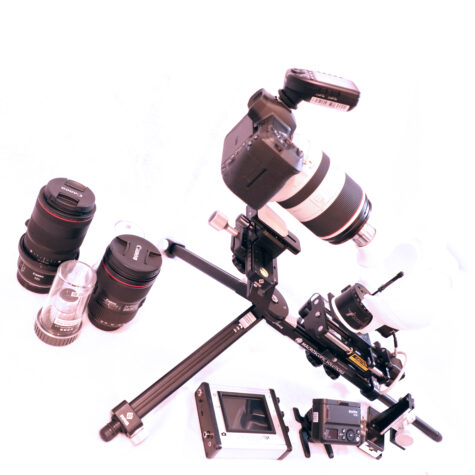 Macropod PRO 3D & Micro Kit R5
 Etapa traslacional X, Y para imágenes panorámicas micro / macro
 Difusor para los objetivos APO Mitutoyo M Plan
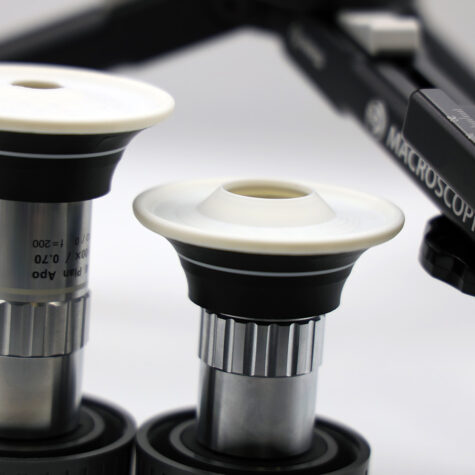 Diffuser for Mitutoyo M Plan APO Objectives
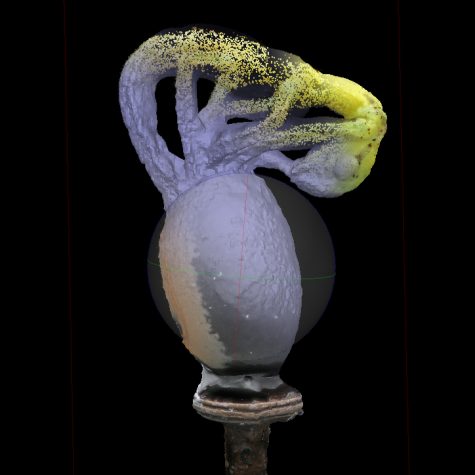 Hatching Stick Insect
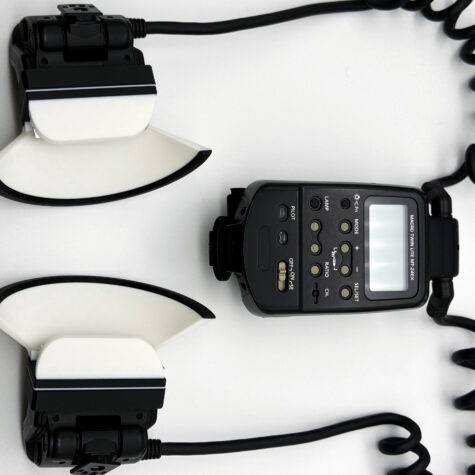 Turtledove Diffusers: Canon MT-24 EX Twin Lite Flash
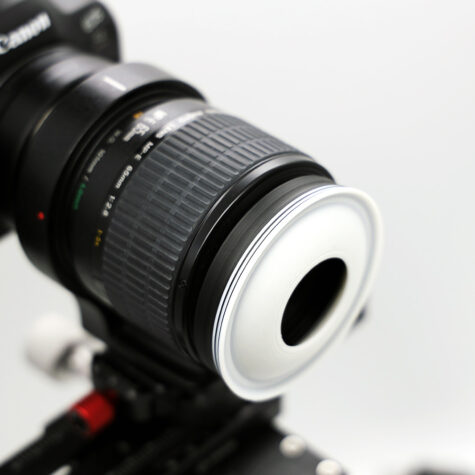 Diffuser for Canon M-PE 65mm 1-5x
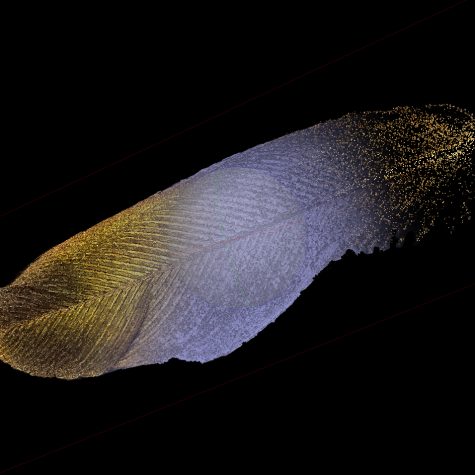 Ruby-throated Hummingbird Tail Feather: 3D Model