
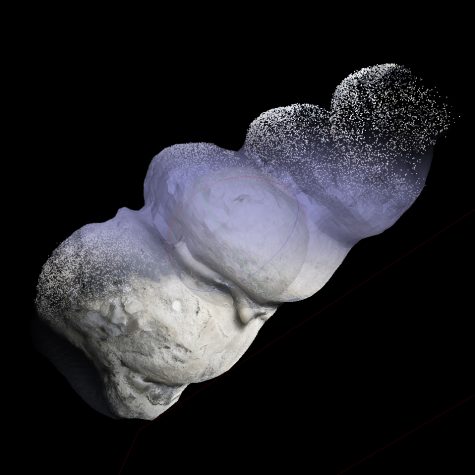
 Internal Mold of a Turretellid Gastropod: Fossil
 Camera Err 20 or Err 30 Service and Repair
 Mitutoyo to 77mm Adapter
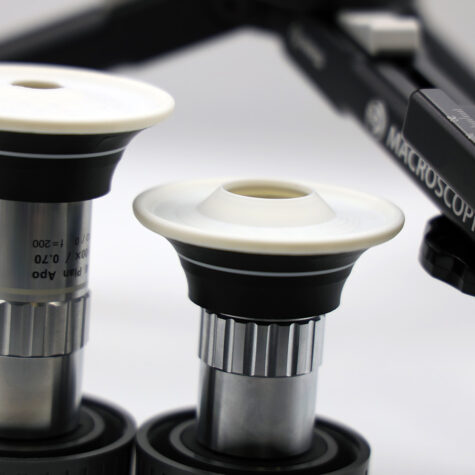 Diffuser for Mitutoyo M Plan APO Objectives
 Turtledove Diffusers: Canon MT-24 EX Twin Lite Flash
 Difusores Turtledove: MT-26EX-RT Twin Lite Flash (Set of 2)
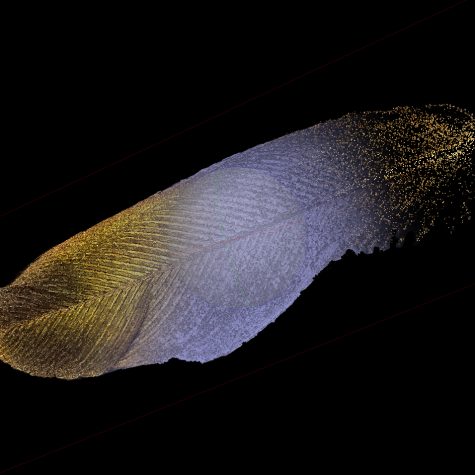 Ruby-throated Hummingbird Tail Feather: 3D Model
 Diffuser for Canon M-PE 65mm 1-5x
 Macropod PRO 3D R5 Educational (Excludes 7.5-100x Objectives)
 Rotary Stage for Manual Micro/Macro 3D Imaging
 Turtledove Diffusers: Godox MF12 Wireless Flash (Set of 2)
 X, Y Translational Stage for Micro/Macro Panoramic Imaging
 Corylus americana, Leaf Texture from Fenton River
 Vertical Stand, 12x8 inches. Aluminum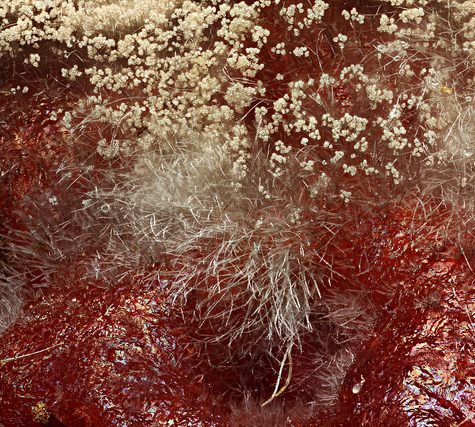
Botrytis cinerea (“botrytis” from Ancient Greek botrys (βότρυς)meaning “grapes”[1] plus the Neolatin suffix -itis for disease) is a necrotrophic fungus that affects many plant species, although its most notable hosts may be wine grapes. In viticulture, it is commonly known as botrytis bunch rot; in horticulture, it is usually called grey mould or gray mold.
The fungus gives rise to two different kinds of infections on grapes. The first, grey rot, is the result of consistently wet or humid conditions, and typically results in the loss of the affected bunches. The second, noble rot, occurs when drier conditions follow wetter, and can result in distinctive sweet dessert wines, such as Sauternes or the Aszú of Tokaji/Grasă de Cotnari. The species name Botrytis cinerea is derived from the Latin for “grapes like ashes”; although poetic, the “grapes” refers to the bunching of the fungal spores on their conidiophores, and “ashes” just refers to the greyish colour of the spores en masse. The fungus is usually referred to by its anamorph (asexual form) name, because the sexual phase is rarely observed. The teleomorph (sexual form) is an ascomycete, Botryotinia fuckeliana, also known as Botryotinia cinerea (see taxonomy box).