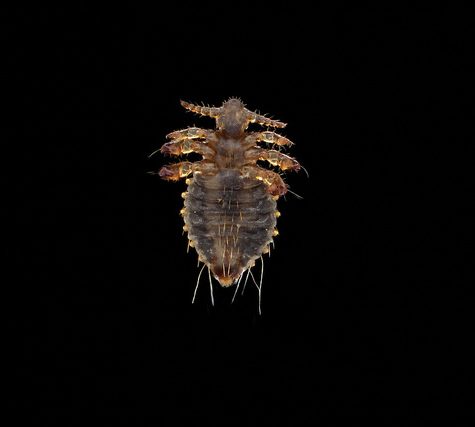
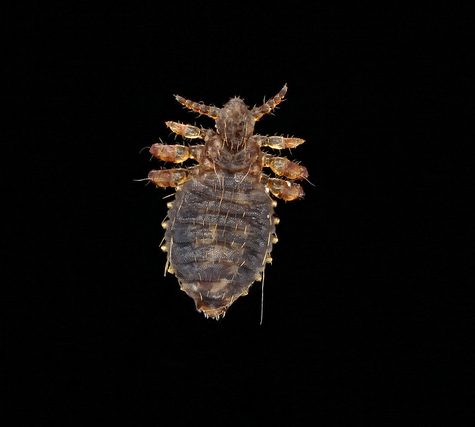
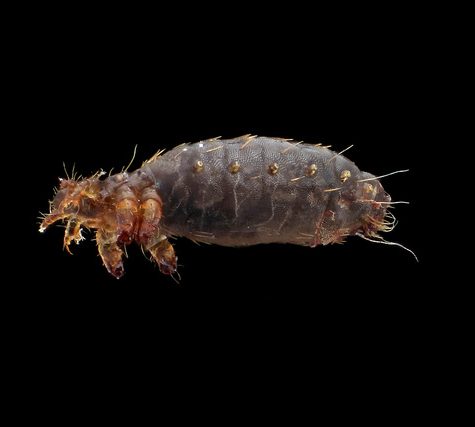
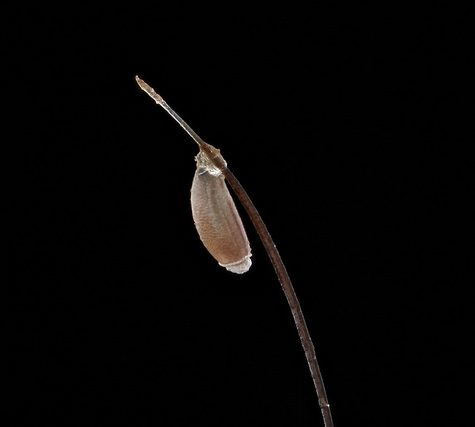
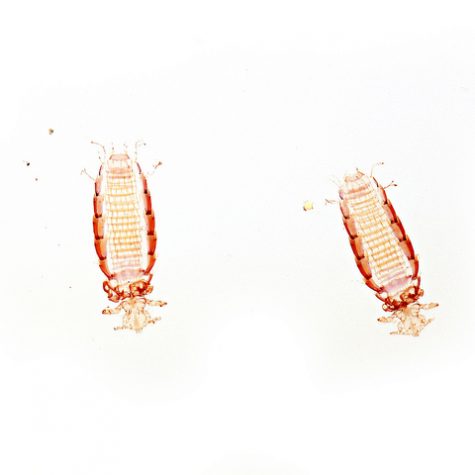
Chewing lice live among the hairs or feathers of their host and feed on skin and debris, while sucking lice pierce the host’s skin and feed on blood and other secretions. They usually spend their whole life on a single host, cementing their eggs, which are known as nits, to hairs or feathers. The eggs hatch into nymphs, which moult three times before becoming fully grown, a process that takes about four weeks.
Humans host three species of louse, the head louse, the body louse and the pubic louse. The body louse has the smallest genome of any known insect; it has been used as a model organism and has been the subject of much research.
Chewing lice live among the hairs or feathers of their host and feed on skin and debris, while sucking lice pierce the host’s skin and feed on blood and other secretions. They usually spend their whole life on a single host, cementing their eggs, which are known as nits, to hairs or feathers. The eggs hatch into nymphs, which moult three times before becoming fully grown, a process that takes about four weeks.
Humans host three species of louse, the head louse, the body louse and the pubic louse. The body louse has the smallest genome of any known insect; it has been used as a model organism and has been the subject of much research.
Chewing lice live among the hairs or feathers of their host and feed on skin and debris, while sucking lice pierce the host’s skin and feed on blood and other secretions. They usually spend their whole life on a single host, cementing their eggs, which are known as nits, to hairs or feathers. The eggs hatch into nymphs, which moult three times before becoming fully grown, a process that takes about four weeks.
Humans host three species of louse, the head louse, the body louse and the pubic louse. The body louse has the smallest genome of any known insect; it has been used as a model organism and has been the subject of much research.
Chewing lice live among the hairs or feathers of their host and feed on skin and debris, while sucking lice pierce the host’s skin and feed on blood and other secretions. They usually spend their whole life on a single host, cementing their eggs, which are known as nits, to hairs or feathers. The eggs hatch into nymphs, which moult three times before becoming fully grown, a process that takes about four weeks.
Humans host three species of louse, the head louse, the body louse and the pubic louse. The body louse has the smallest genome of any known insect; it has been used as a model organism and has been the subject of much research.
Chewing lice live among the hairs or feathers of their host and feed on skin and debris, while sucking lice pierce the host’s skin and feed on blood and other secretions. They usually spend their whole life on a single host, cementing their eggs, which are known as nits, to hairs or feathers. The eggs hatch into nymphs, which moult three times before becoming fully grown, a process that takes about four weeks.
Humans host three species of louse, the head louse, the body louse and the pubic louse. The body louse has the smallest genome of any known insect; it has been used as a model organism and has been the subject of much research.