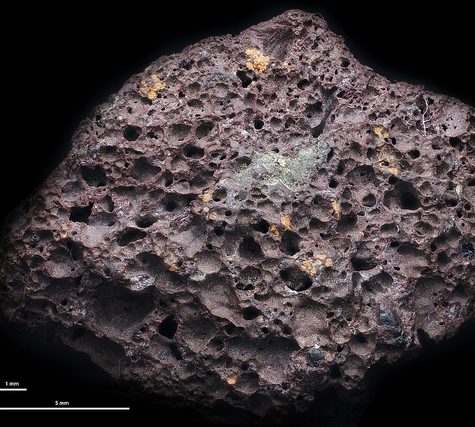
Vesicular Basalt Ah-ah

 Corylus americana, Leaf Texture from Fenton River1 × $59.00
 EOS R31 × $5,399.00
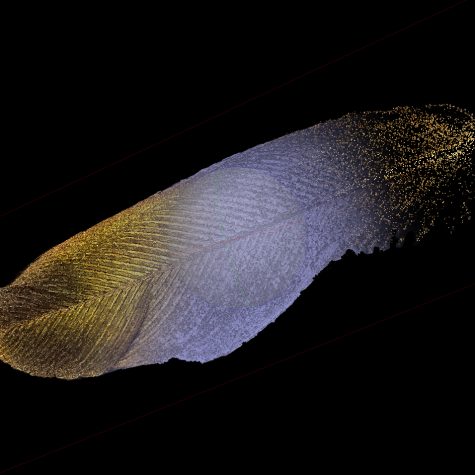 Ruby-throated Hummingbird Tail Feather: 3D Model1 × $59.00
 Turtledove Diffusers: Canon MT-24 EX Twin Lite Flash1 × $79.00
 Rotary Stage for Manual Micro/Macro 3D Imaging1 × $449.00
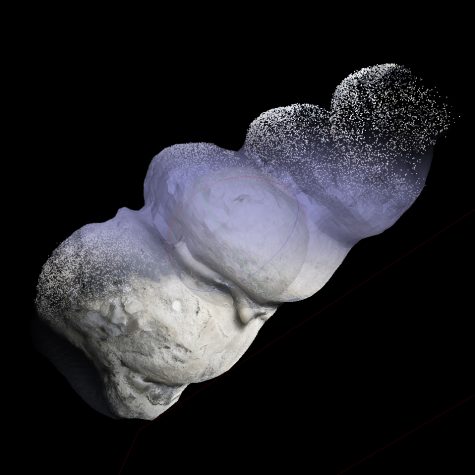 Internal Mold of a Turretellid Gastropod: Fossil1 × $59.00
 Macropod PRO 3D & Micro Kit R5 Educational1 × $43,960.00
Basalt is a common extrusive igneous(volcanic) rock formed from the rapid cooling of basaltic lava exposed at or very near the surface of a planet or moon. Flood basalt describes the formation in a series of lava basalt flows.

Tephra is fragmental material produced by a volcanic eruption regardless of composition, fragment size or emplacement mechanism.[1]
Volcanologists also refer to airborne fragments as pyroclasts. Once clasts have fallen to the ground they remain as tephra unless hot enough to fuse together into pyroclastic rock or tuff.

Tephra is fragmental material produced by a volcanic eruption regardless of composition, fragment size or emplacement mechanism.[1]
Volcanologists also refer to airborne fragments as pyroclasts. Once clasts have fallen to the ground they remain as tephra unless hot enough to fuse together into pyroclastic rock or tuff.

Tephra is fragmental material produced by a volcanic eruption regardless of composition, fragment size or emplacement mechanism.[1]
Volcanologists also refer to airborne fragments as pyroclasts. Once clasts have fallen to the ground they remain as tephra unless hot enough to fuse together into pyroclastic rock or tuff.

Tephra is fragmental material produced by a volcanic eruption regardless of composition, fragment size or emplacement mechanism.[1]
Volcanologists also refer to airborne fragments as pyroclasts. Once clasts have fallen to the ground they remain as tephra unless hot enough to fuse together into pyroclastic rock or tuff.

Tephra is fragmental material produced by a volcanic eruption regardless of composition, fragment size or emplacement mechanism.[1]
Volcanologists also refer to airborne fragments as pyroclasts. Once clasts have fallen to the ground they remain as tephra unless hot enough to fuse together into pyroclastic rock or tuff.