The Excitation Filters will convert the Macropod into a system that is capable of capturing fluorescence. They will work with any camera utilizing the MT-24 EX Dual twin lite flash by Canon. It is recommended that the Macropod be used for magnifications greater than 5x due to the reduced levels of light being emitted.
Blue excitation fluorescence filters are designed with a narrow passband excitation range (20 nanometers) in order to minimize autofluorescence and photobleaching. The longpass barrier (emission) filter is capable of transmitting signals from green, yellow, and red fluorophores that have significant absorption in the upper blue wavelength region. The filters have a longpass dichromatic mirror with a cut-on wavelength of 505 nanometers.
Select options
This product has multiple variants. The options may be chosen on the product page
$599.00
Petrographic Analyzer
The device is made to work with specific flash units. We have options from the Yongnuo YN-24EX, Canon MT-26EX-RT, Canon MT 24EX and Godox MF12 (Recommended). We strongly recommend using the Godox MF12 Flash units as they are wireless and allow for seamless control with the flash unit. Flash units are not required, but recommended when imaging. The analyzers are equipped with LED lights.
Select options
This product has multiple variants. The options may be chosen on the product page
$19.00–$400.00Price range: $19.00 through $400.00
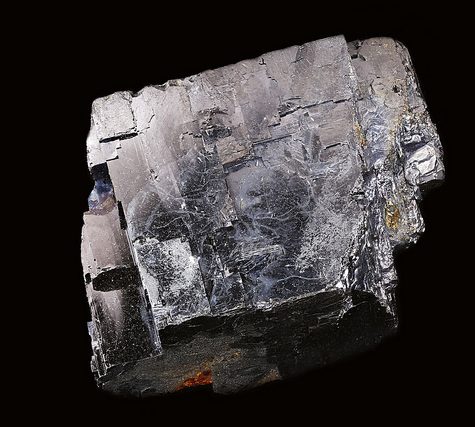
Galena
Galena is the main ore of lead, used since ancient times. Because of its somewhat low melting point, it was easy to liberate by smelting. It typically forms in low-temperature sedimentary deposits.
In some deposits galena contains about 1–2% silver, a byproduct that far outweighs the main lead ore in revenue. Galena deposits often also contain significant amounts of silver as included silver sulfide mineral phases or as limited solid solution within the galena structure. These argentiferous galenas have long been the most important ore of silver.[citation needed]
Cubic galena with calcite from Jasper County, Missouri, USA; 5.1 cm × 3.2 cm × 2.8 cm (2.0 in × 1.3 in × 1.1 in)
Galena also was a major mineral of the zinc-lead mines of the tri-state district around Joplin in southwestern Missouri and the adjoining areas of Kansas and Oklahoma. Galena is also an important ore mineral in the silver mining regions of Colorado, Idaho, Utah and Montana. Of the latter, the Coeur d’Alene district of northern Idaho was most prominent.
Derbyshire in the UK was one of the main areas where galena was mined.
The largest documented crystal of galena is composite cubo-octahedra from the Great Laxey Mine, Isle of Man, measuring 25 cm × 25 cm × 25 cm (10 in × 10 in × 10 in).
Select options
This product has multiple variants. The options may be chosen on the product page
$19.00–$400.00Price range: $19.00 through $400.00
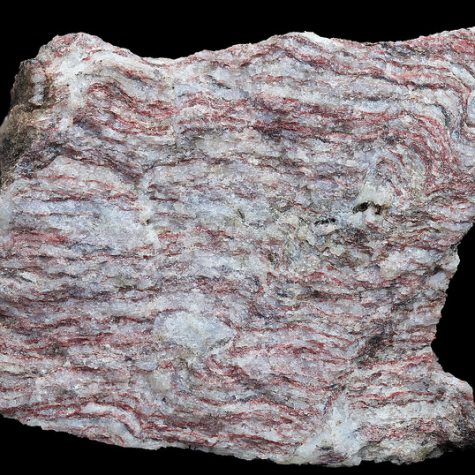
Gneiss from Queenstown, New Zealand
Gneiss ( /ˈnaɪs/) is a common distributed type of rock formed by high-grade regional metamorphic processes from pre-existing formations that were originally either igneous or sedimentary rocks. It is often foliated (composed of layers of sheet-like planar structures). The foliations are characterized by alternating darker and lighter colored bands, called “gneissic banding”.
Select options
This product has multiple variants. The options may be chosen on the product page
Select options
This product has multiple variants. The options may be chosen on the product page
$19.00–$400.00Price range: $19.00 through $400.00
Water Droplets on Leaf
A drop or droplet is a small column of liquid, bounded completely or almost completely by free surfaces. A drop may form when liquid accumulates at the lower end of a tube or other surface boundary, producing a hanging drop called a pendant drop. Drops may also be formed by the condensation of a vapor or by atomization of a larger mass of liquid. Liquid forms drops because the liquid exhibits surface tension.[1]
Select options
This product has multiple variants. The options may be chosen on the product page
$19.00–$400.00Price range: $19.00 through $400.00
Snowflake from Coventry, CT
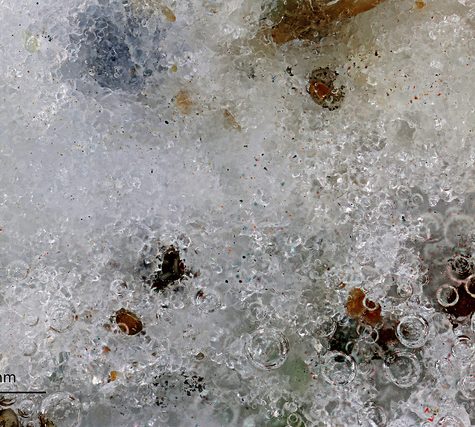
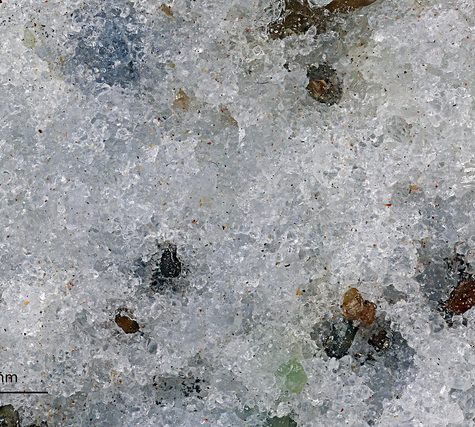
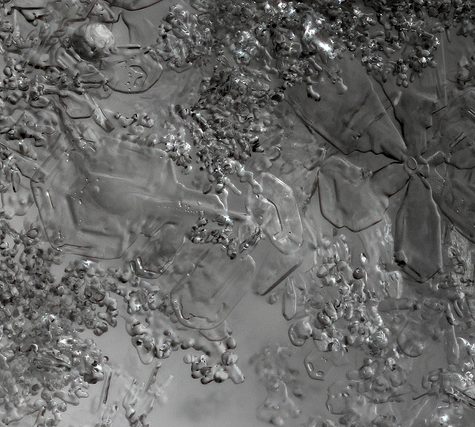
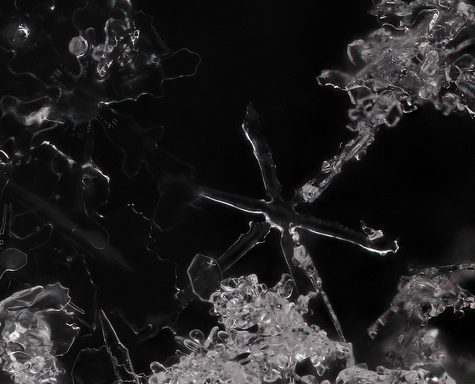
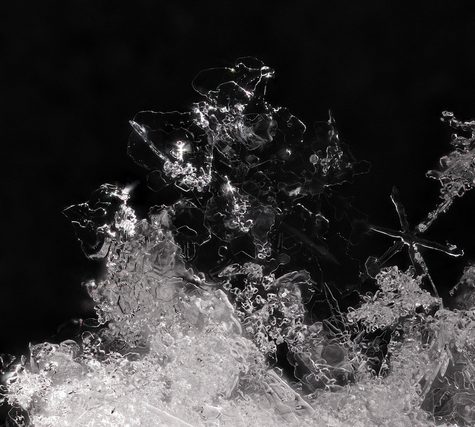
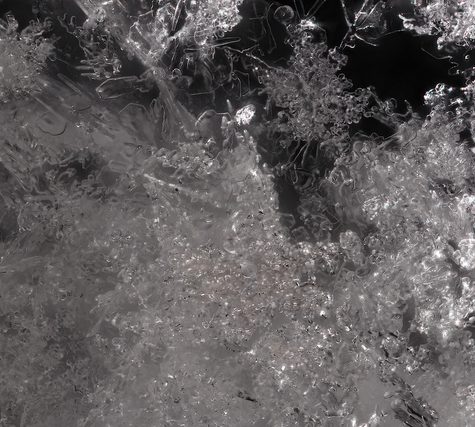
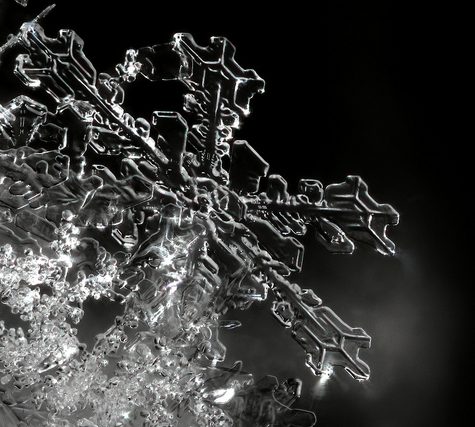
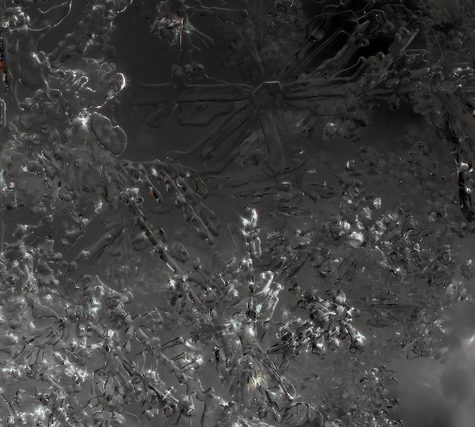
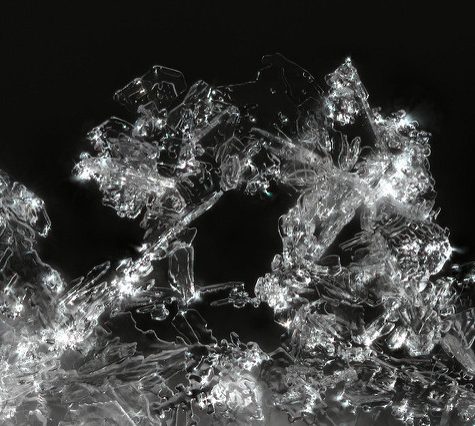
A snowflake is a single ice crystal that has achieved a sufficient size, and may have amalgamated with others, then falls through the Earth’s atmosphere as snow.[1][2][3] Each flake nucleates around a dust particle in supersaturated air masses by attracting supercooled cloud water droplets, which freeze and accrete in crystal form. Complex shapes emerge as the flake moves through differing temperature and humidity zones in the atmosphere, such that individual snowflakes differ in detail from one another, but may be categorized in eight broad classifications and at least 80 individual variants. The main constituent shapes for ice crystals, from which combinations may occur, are needle, column, plate and rime. Snowflakes appear white in color despite being made of clear ice. This is due to diffuse reflection of the whole spectrum of light by the small crystal facets.[4]
Select options
This product has multiple variants. The options may be chosen on the product page
$19.00–$400.00Price range: $19.00 through $400.00
Snowflake from Coventry, CT
A snowflake is a single ice crystal that has achieved a sufficient size, and may have amalgamated with others, then falls through the Earth’s atmosphere as snow.[1][2][3] Each flake nucleates around a dust particle in supersaturated air masses by attracting supercooled cloud water droplets, which freeze and accrete in crystal form. Complex shapes emerge as the flake moves through differing temperature and humidity zones in the atmosphere, such that individual snowflakes differ in detail from one another, but may be categorized in eight broad classifications and at least 80 individual variants. The main constituent shapes for ice crystals, from which combinations may occur, are needle, column, plate and rime. Snowflakes appear white in color despite being made of clear ice. This is due to diffuse reflection of the whole spectrum of light by the small crystal facets.[4]
Select options
This product has multiple variants. The options may be chosen on the product page
$19.00–$400.00Price range: $19.00 through $400.00
Snowflake from Coventry, CT
A snowflake is a single ice crystal that has achieved a sufficient size, and may have amalgamated with others, then falls through the Earth’s atmosphere as snow.[1][2][3] Each flake nucleates around a dust particle in supersaturated air masses by attracting supercooled cloud water droplets, which freeze and accrete in crystal form. Complex shapes emerge as the flake moves through differing temperature and humidity zones in the atmosphere, such that individual snowflakes differ in detail from one another, but may be categorized in eight broad classifications and at least 80 individual variants. The main constituent shapes for ice crystals, from which combinations may occur, are needle, column, plate and rime. Snowflakes appear white in color despite being made of clear ice. This is due to diffuse reflection of the whole spectrum of light by the small crystal facets.[4]
Select options
This product has multiple variants. The options may be chosen on the product page
$19.00–$400.00Price range: $19.00 through $400.00
Snowflake from Coventry, CT
A snowflake is a single ice crystal that has achieved a sufficient size, and may have amalgamated with others, then falls through the Earth’s atmosphere as snow.[1][2][3] Each flake nucleates around a dust particle in supersaturated air masses by attracting supercooled cloud water droplets, which freeze and accrete in crystal form. Complex shapes emerge as the flake moves through differing temperature and humidity zones in the atmosphere, such that individual snowflakes differ in detail from one another, but may be categorized in eight broad classifications and at least 80 individual variants. The main constituent shapes for ice crystals, from which combinations may occur, are needle, column, plate and rime. Snowflakes appear white in color despite being made of clear ice. This is due to diffuse reflection of the whole spectrum of light by the small crystal facets.[4]
Select options
This product has multiple variants. The options may be chosen on the product page
$19.00–$400.00Price range: $19.00 through $400.00
Snowflake from Coventry, CT
A snowflake is a single ice crystal that has achieved a sufficient size, and may have amalgamated with others, then falls through the Earth’s atmosphere as snow.[1][2][3] Each flake nucleates around a dust particle in supersaturated air masses by attracting supercooled cloud water droplets, which freeze and accrete in crystal form. Complex shapes emerge as the flake moves through differing temperature and humidity zones in the atmosphere, such that individual snowflakes differ in detail from one another, but may be categorized in eight broad classifications and at least 80 individual variants. The main constituent shapes for ice crystals, from which combinations may occur, are needle, column, plate and rime. Snowflakes appear white in color despite being made of clear ice. This is due to diffuse reflection of the whole spectrum of light by the small crystal facets.[4]
Select options
This product has multiple variants. The options may be chosen on the product page
$19.00–$400.00Price range: $19.00 through $400.00
Snowflake from Coventry, CT
A snowflake is a single ice crystal that has achieved a sufficient size, and may have amalgamated with others, then falls through the Earth’s atmosphere as snow.[1][2][3] Each flake nucleates around a dust particle in supersaturated air masses by attracting supercooled cloud water droplets, which freeze and accrete in crystal form. Complex shapes emerge as the flake moves through differing temperature and humidity zones in the atmosphere, such that individual snowflakes differ in detail from one another, but may be categorized in eight broad classifications and at least 80 individual variants. The main constituent shapes for ice crystals, from which combinations may occur, are needle, column, plate and rime. Snowflakes appear white in color despite being made of clear ice. This is due to diffuse reflection of the whole spectrum of light by the small crystal facets.[4]
Select options
This product has multiple variants. The options may be chosen on the product page
$19.00–$400.00Price range: $19.00 through $400.00
Snowflake from Coventry, CT
A snowflake is a single ice crystal that has achieved a sufficient size, and may have amalgamated with others, then falls through the Earth’s atmosphere as snow.[1][2][3] Each flake nucleates around a dust particle in supersaturated air masses by attracting supercooled cloud water droplets, which freeze and accrete in crystal form. Complex shapes emerge as the flake moves through differing temperature and humidity zones in the atmosphere, such that individual snowflakes differ in detail from one another, but may be categorized in eight broad classifications and at least 80 individual variants. The main constituent shapes for ice crystals, from which combinations may occur, are needle, column, plate and rime. Snowflakes appear white in color despite being made of clear ice. This is due to diffuse reflection of the whole spectrum of light by the small crystal facets.[4]

 Extended Training & Support
 Motion Control Service and Repair
 Slide Stage compatible with X, Y Rack-Pinion and Universal Mount
 L Plate for Mounting Specimens on Translational Stage
 Rotary Stage for Manual Micro/Macro 3D Imaging
 Adapter Plate for Fixing Rotary and Translational Stages
 Fluorescence Kit