Showing all 13 resultsSorted by price: high to low
Select options
This product has multiple variants. The options may be chosen on the product page
$19.00–$400.00Price range: $19.00 through $400.00
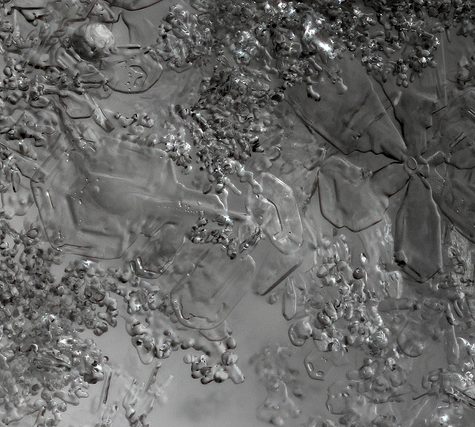
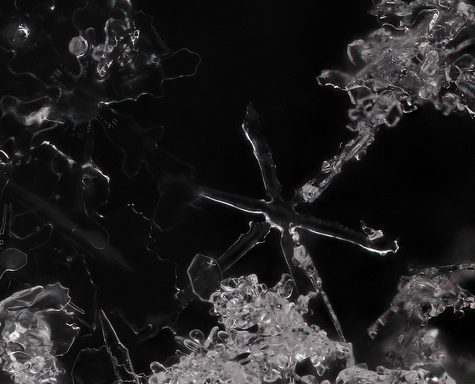
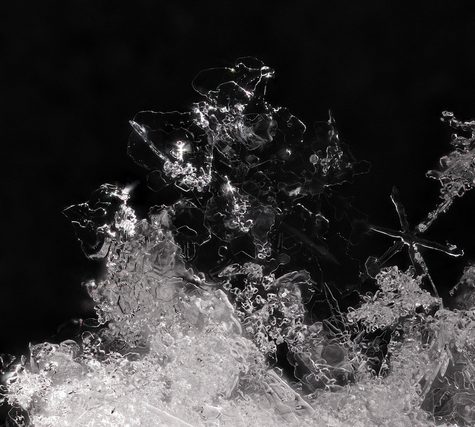
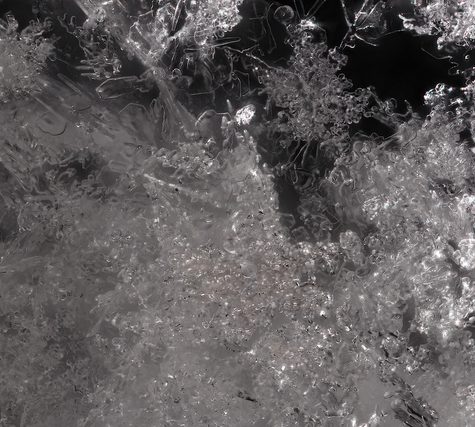
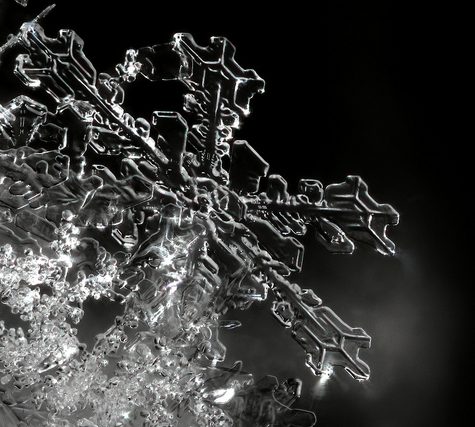
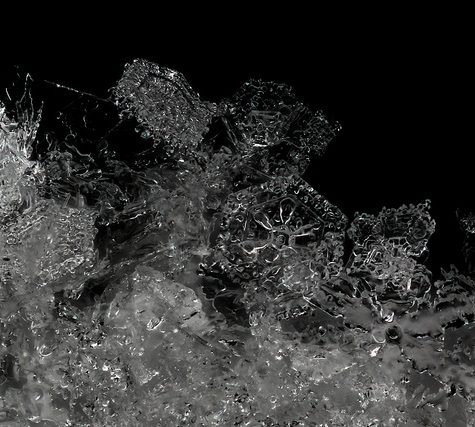
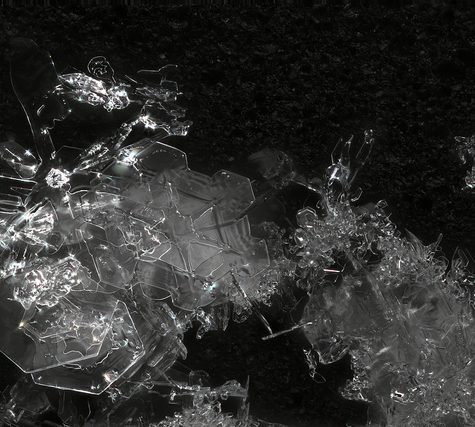
Snowflake from Coventry, CT
A snowflake is a single ice crystal that has achieved a sufficient size, and may have amalgamated with others, then falls through the Earth’s atmosphere as snow.[1][2][3] Each flake nucleates around a dust particle in supersaturated air masses by attracting supercooled cloud water droplets, which freeze and accrete in crystal form. Complex shapes emerge as the flake moves through differing temperature and humidity zones in the atmosphere, such that individual snowflakes differ in detail from one another, but may be categorized in eight broad classifications and at least 80 individual variants. The main constituent shapes for ice crystals, from which combinations may occur, are needle, column, plate and rime. Snowflakes appear white in color despite being made of clear ice. This is due to diffuse reflection of the whole spectrum of light by the small crystal facets.[4]
Select options
This product has multiple variants. The options may be chosen on the product page
$19.00–$400.00Price range: $19.00 through $400.00
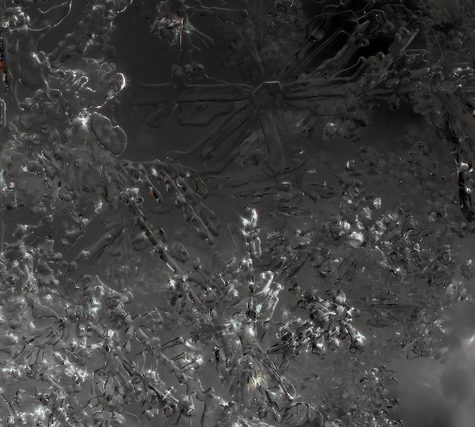
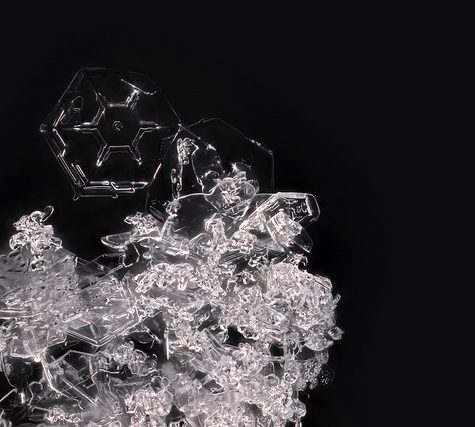
Snowflake from Coventry, CT
A snowflake is a single ice crystal that has achieved a sufficient size, and may have amalgamated with others, then falls through the Earth’s atmosphere as snow.[1][2][3] Each flake nucleates around a dust particle in supersaturated air masses by attracting supercooled cloud water droplets, which freeze and accrete in crystal form. Complex shapes emerge as the flake moves through differing temperature and humidity zones in the atmosphere, such that individual snowflakes differ in detail from one another, but may be categorized in eight broad classifications and at least 80 individual variants. The main constituent shapes for ice crystals, from which combinations may occur, are needle, column, plate and rime. Snowflakes appear white in color despite being made of clear ice. This is due to diffuse reflection of the whole spectrum of light by the small crystal facets.[4]
Select options
This product has multiple variants. The options may be chosen on the product page
$19.00–$400.00Price range: $19.00 through $400.00
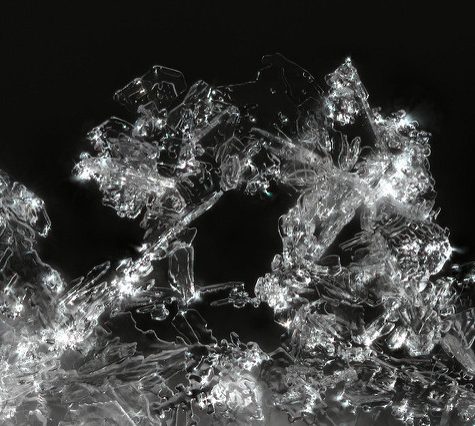
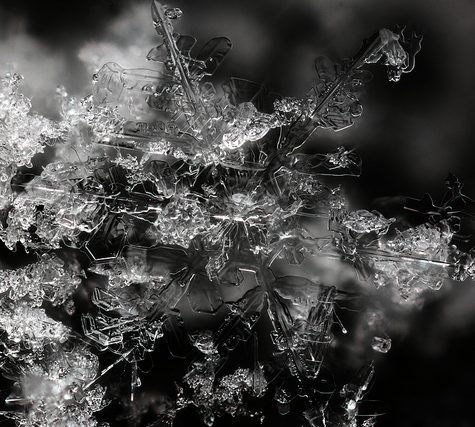
Snowflake from Coventry, CT
A snowflake is a single ice crystal that has achieved a sufficient size, and may have amalgamated with others, then falls through the Earth’s atmosphere as snow.[1][2][3] Each flake nucleates around a dust particle in supersaturated air masses by attracting supercooled cloud water droplets, which freeze and accrete in crystal form. Complex shapes emerge as the flake moves through differing temperature and humidity zones in the atmosphere, such that individual snowflakes differ in detail from one another, but may be categorized in eight broad classifications and at least 80 individual variants. The main constituent shapes for ice crystals, from which combinations may occur, are needle, column, plate and rime. Snowflakes appear white in color despite being made of clear ice. This is due to diffuse reflection of the whole spectrum of light by the small crystal facets.[4]
Select options
This product has multiple variants. The options may be chosen on the product page
$19.00–$400.00Price range: $19.00 through $400.00
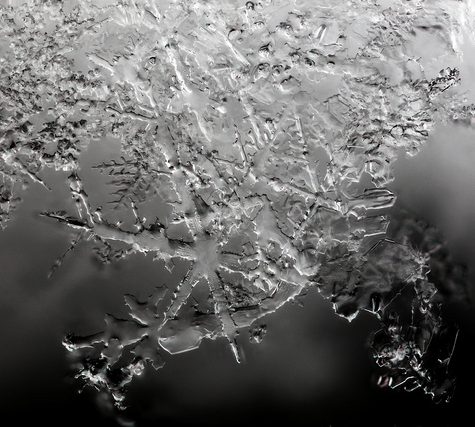
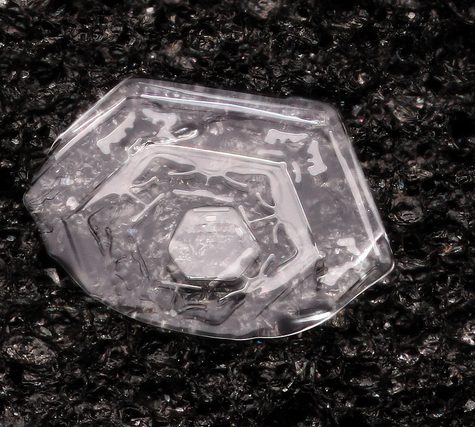
Snowflake from Coventry, CT
A snowflake is a single ice crystal that has achieved a sufficient size, and may have amalgamated with others, then falls through the Earth’s atmosphere as snow.[1][2][3] Each flake nucleates around a dust particle in supersaturated air masses by attracting supercooled cloud water droplets, which freeze and accrete in crystal form. Complex shapes emerge as the flake moves through differing temperature and humidity zones in the atmosphere, such that individual snowflakes differ in detail from one another, but may be categorized in eight broad classifications and at least 80 individual variants. The main constituent shapes for ice crystals, from which combinations may occur, are needle, column, plate and rime. Snowflakes appear white in color despite being made of clear ice. This is due to diffuse reflection of the whole spectrum of light by the small crystal facets.[4]
Select options
This product has multiple variants. The options may be chosen on the product page
$19.00–$400.00Price range: $19.00 through $400.00
Snowflake from Coventry, CT
A snowflake is a single ice crystal that has achieved a sufficient size, and may have amalgamated with others, then falls through the Earth’s atmosphere as snow.[1][2][3] Each flake nucleates around a dust particle in supersaturated air masses by attracting supercooled cloud water droplets, which freeze and accrete in crystal form. Complex shapes emerge as the flake moves through differing temperature and humidity zones in the atmosphere, such that individual snowflakes differ in detail from one another, but may be categorized in eight broad classifications and at least 80 individual variants. The main constituent shapes for ice crystals, from which combinations may occur, are needle, column, plate and rime. Snowflakes appear white in color despite being made of clear ice. This is due to diffuse reflection of the whole spectrum of light by the small crystal facets.[4]
Select options
This product has multiple variants. The options may be chosen on the product page
$19.00–$400.00Price range: $19.00 through $400.00
Snowflake from Coventry, CT
A snowflake is a single ice crystal that has achieved a sufficient size, and may have amalgamated with others, then falls through the Earth’s atmosphere as snow.[1][2][3] Each flake nucleates around a dust particle in supersaturated air masses by attracting supercooled cloud water droplets, which freeze and accrete in crystal form. Complex shapes emerge as the flake moves through differing temperature and humidity zones in the atmosphere, such that individual snowflakes differ in detail from one another, but may be categorized in eight broad classifications and at least 80 individual variants. The main constituent shapes for ice crystals, from which combinations may occur, are needle, column, plate and rime. Snowflakes appear white in color despite being made of clear ice. This is due to diffuse reflection of the whole spectrum of light by the small crystal facets.[4]
Select options
This product has multiple variants. The options may be chosen on the product page
$19.00–$400.00Price range: $19.00 through $400.00
Snowflake from Coventry, CT
A snowflake is a single ice crystal that has achieved a sufficient size, and may have amalgamated with others, then falls through the Earth’s atmosphere as snow.[1][2][3] Each flake nucleates around a dust particle in supersaturated air masses by attracting supercooled cloud water droplets, which freeze and accrete in crystal form. Complex shapes emerge as the flake moves through differing temperature and humidity zones in the atmosphere, such that individual snowflakes differ in detail from one another, but may be categorized in eight broad classifications and at least 80 individual variants. The main constituent shapes for ice crystals, from which combinations may occur, are needle, column, plate and rime. Snowflakes appear white in color despite being made of clear ice. This is due to diffuse reflection of the whole spectrum of light by the small crystal facets.[4]
Select options
This product has multiple variants. The options may be chosen on the product page
$19.00–$400.00Price range: $19.00 through $400.00
Snowflake from Coventry, CT
A snowflake is a single ice crystal that has achieved a sufficient size, and may have amalgamated with others, then falls through the Earth’s atmosphere as snow.[1][2][3] Each flake nucleates around a dust particle in supersaturated air masses by attracting supercooled cloud water droplets, which freeze and accrete in crystal form. Complex shapes emerge as the flake moves through differing temperature and humidity zones in the atmosphere, such that individual snowflakes differ in detail from one another, but may be categorized in eight broad classifications and at least 80 individual variants. The main constituent shapes for ice crystals, from which combinations may occur, are needle, column, plate and rime. Snowflakes appear white in color despite being made of clear ice. This is due to diffuse reflection of the whole spectrum of light by the small crystal facets.[4]
Select options
This product has multiple variants. The options may be chosen on the product page
$19.00–$400.00Price range: $19.00 through $400.00
Snowflake from Coventry, CT
A snowflake is a single ice crystal that has achieved a sufficient size, and may have amalgamated with others, then falls through the Earth’s atmosphere as snow.[1][2][3] Each flake nucleates around a dust particle in supersaturated air masses by attracting supercooled cloud water droplets, which freeze and accrete in crystal form. Complex shapes emerge as the flake moves through differing temperature and humidity zones in the atmosphere, such that individual snowflakes differ in detail from one another, but may be categorized in eight broad classifications and at least 80 individual variants. The main constituent shapes for ice crystals, from which combinations may occur, are needle, column, plate and rime. Snowflakes appear white in color despite being made of clear ice. This is due to diffuse reflection of the whole spectrum of light by the small crystal facets.[4]
Select options
This product has multiple variants. The options may be chosen on the product page
$19.00–$400.00Price range: $19.00 through $400.00
Snowflake from Coventry, CT
A snowflake is a single ice crystal that has achieved a sufficient size, and may have amalgamated with others, then falls through the Earth’s atmosphere as snow.[1][2][3] Each flake nucleates around a dust particle in supersaturated air masses by attracting supercooled cloud water droplets, which freeze and accrete in crystal form. Complex shapes emerge as the flake moves through differing temperature and humidity zones in the atmosphere, such that individual snowflakes differ in detail from one another, but may be categorized in eight broad classifications and at least 80 individual variants. The main constituent shapes for ice crystals, from which combinations may occur, are needle, column, plate and rime. Snowflakes appear white in color despite being made of clear ice. This is due to diffuse reflection of the whole spectrum of light by the small crystal facets.[4]
Select options
This product has multiple variants. The options may be chosen on the product page
$19.00–$400.00Price range: $19.00 through $400.00
Snowflake from Coventry, CT
A snowflake is a single ice crystal that has achieved a sufficient size, and may have amalgamated with others, then falls through the Earth’s atmosphere as snow.[1][2][3] Each flake nucleates around a dust particle in supersaturated air masses by attracting supercooled cloud water droplets, which freeze and accrete in crystal form. Complex shapes emerge as the flake moves through differing temperature and humidity zones in the atmosphere, such that individual snowflakes differ in detail from one another, but may be categorized in eight broad classifications and at least 80 individual variants. The main constituent shapes for ice crystals, from which combinations may occur, are needle, column, plate and rime. Snowflakes appear white in color despite being made of clear ice. This is due to diffuse reflection of the whole spectrum of light by the small crystal facets.[4]
Select options
This product has multiple variants. The options may be chosen on the product page
$19.00–$400.00Price range: $19.00 through $400.00
Snowflake from Coventry, CT
A snowflake is a single ice crystal that has achieved a sufficient size, and may have amalgamated with others, then falls through the Earth’s atmosphere as snow.[1][2][3] Each flake nucleates around a dust particle in supersaturated air masses by attracting supercooled cloud water droplets, which freeze and accrete in crystal form. Complex shapes emerge as the flake moves through differing temperature and humidity zones in the atmosphere, such that individual snowflakes differ in detail from one another, but may be categorized in eight broad classifications and at least 80 individual variants. The main constituent shapes for ice crystals, from which combinations may occur, are needle, column, plate and rime. Snowflakes appear white in color despite being made of clear ice. This is due to diffuse reflection of the whole spectrum of light by the small crystal facets.[4]
Select options
This product has multiple variants. The options may be chosen on the product page
$19.00–$400.00Price range: $19.00 through $400.00
Snowflake from Coventry, CT
A snowflake is a single ice crystal that has achieved a sufficient size, and may have amalgamated with others, then falls through the Earth’s atmosphere as snow.[1][2][3] Each flake nucleates around a dust particle in supersaturated air masses by attracting supercooled cloud water droplets, which freeze and accrete in crystal form. Complex shapes emerge as the flake moves through differing temperature and humidity zones in the atmosphere, such that individual snowflakes differ in detail from one another, but may be categorized in eight broad classifications and at least 80 individual variants. The main constituent shapes for ice crystals, from which combinations may occur, are needle, column, plate and rime. Snowflakes appear white in color despite being made of clear ice. This is due to diffuse reflection of the whole spectrum of light by the small crystal facets.[4]

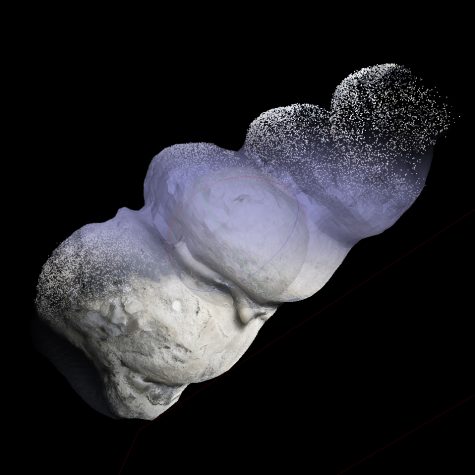 Internal Mold of a Turretellid Gastropod: Fossil
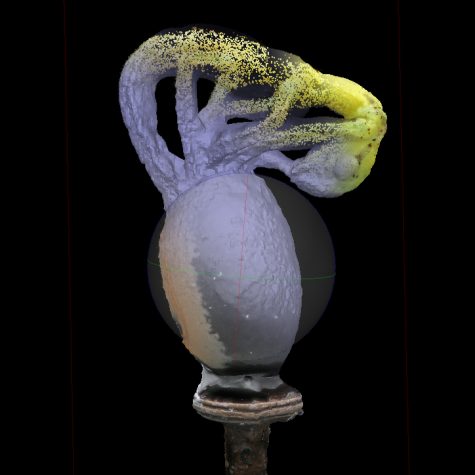 Hatching Stick Insect
 Corylus americana, Leaf Texture from Fenton River
 Diffuser for Canon M-PE 65mm 1-5x