Select options
This product has multiple variants. The options may be chosen on the product page
$19.00–$400.00Price range: $19.00 through $400.00
Dollar Bill
A currency (from Middle English: curraunt, “in circulation”, from Latin: currens, -entis) in the most specific use of the word refers to money in any form when in actual use or circulation as a medium of exchange, especially circulating banknotes and coins.[1][2]A more general definition is that a currency is a system of money (monetary units) in common use, especially in a nation.[3] Under this definition, US dollars, British pounds, Australian dollars, and European euros are examples of currency. These various currencies are recognized stores of value and are traded between nations in foreign exchange markets, which determine the relative values of the different currencies.[4] Currencies in this sense are defined by governments, and each type has limited boundaries of acceptance.
Select options
This product has multiple variants. The options may be chosen on the product page
$19.00–$400.00Price range: $19.00 through $400.00
Dollar Bill
A currency (from Middle English: curraunt, “in circulation”, from Latin: currens, -entis) in the most specific use of the word refers to money in any form when in actual use or circulation as a medium of exchange, especially circulating banknotes and coins.[1][2]A more general definition is that a currency is a system of money (monetary units) in common use, especially in a nation.[3] Under this definition, US dollars, British pounds, Australian dollars, and European euros are examples of currency. These various currencies are recognized stores of value and are traded between nations in foreign exchange markets, which determine the relative values of the different currencies.[4] Currencies in this sense are defined by governments, and each type has limited boundaries of acceptance.
Select options
This product has multiple variants. The options may be chosen on the product page
$19.00–$400.00Price range: $19.00 through $400.00
Dollar Bill
A currency (from Middle English: curraunt, “in circulation”, from Latin: currens, -entis) in the most specific use of the word refers to money in any form when in actual use or circulation as a medium of exchange, especially circulating banknotes and coins.[1][2]A more general definition is that a currency is a system of money (monetary units) in common use, especially in a nation.[3] Under this definition, US dollars, British pounds, Australian dollars, and European euros are examples of currency. These various currencies are recognized stores of value and are traded between nations in foreign exchange markets, which determine the relative values of the different currencies.[4] Currencies in this sense are defined by governments, and each type has limited boundaries of acceptance.
Select options
This product has multiple variants. The options may be chosen on the product page
$19.00–$400.00Price range: $19.00 through $400.00
Dollar Bill
A currency (from Middle English: curraunt, “in circulation”, from Latin: currens, -entis) in the most specific use of the word refers to money in any form when in actual use or circulation as a medium of exchange, especially circulating banknotes and coins.[1][2]A more general definition is that a currency is a system of money (monetary units) in common use, especially in a nation.[3] Under this definition, US dollars, British pounds, Australian dollars, and European euros are examples of currency. These various currencies are recognized stores of value and are traded between nations in foreign exchange markets, which determine the relative values of the different currencies.[4] Currencies in this sense are defined by governments, and each type has limited boundaries of acceptance.
Select options
This product has multiple variants. The options may be chosen on the product page
$19.00–$400.00Price range: $19.00 through $400.00
Dollar Bill at 10x
A currency (from Middle English: curraunt, “in circulation”, from Latin: currens, -entis) in the most specific use of the word refers to money in any form when in actual use or circulation as a medium of exchange, especially circulating banknotes and coins.[1][2]A more general definition is that a currency is a system of money (monetary units) in common use, especially in a nation.[3] Under this definition, US dollars, British pounds, Australian dollars, and European euros are examples of currency. These various currencies are recognized stores of value and are traded between nations in foreign exchange markets, which determine the relative values of the different currencies.[4] Currencies in this sense are defined by governments, and each type has limited boundaries of acceptance.
Select options
This product has multiple variants. The options may be chosen on the product page
$19.00–$400.00Price range: $19.00 through $400.00
Micro Print on Canada $5 Bill
A currency (from Middle English: curraunt, “in circulation”, from Latin: currens, -entis) in the most specific use of the word refers to money in any form when in actual use or circulation as a medium of exchange, especially circulating banknotes and coins.[1][2]A more general definition is that a currency is a system of money (monetary units) in common use, especially in a nation.[3] Under this definition, US dollars, British pounds, Australian dollars, and European euros are examples of currency. These various currencies are recognized stores of value and are traded between nations in foreign exchange markets, which determine the relative values of the different currencies.[4] Currencies in this sense are defined by governments, and each type has limited boundaries of acceptance.
Select options
This product has multiple variants. The options may be chosen on the product page
$19.00–$400.00Price range: $19.00 through $400.00
Micro Print on US $5 Bill
A currency (from Middle English: curraunt, “in circulation”, from Latin: currens, -entis) in the most specific use of the word refers to money in any form when in actual use or circulation as a medium of exchange, especially circulating banknotes and coins.[1][2]A more general definition is that a currency is a system of money (monetary units) in common use, especially in a nation.[3] Under this definition, US dollars, British pounds, Australian dollars, and European euros are examples of currency. These various currencies are recognized stores of value and are traded between nations in foreign exchange markets, which determine the relative values of the different currencies.[4] Currencies in this sense are defined by governments, and each type has limited boundaries of acceptance.

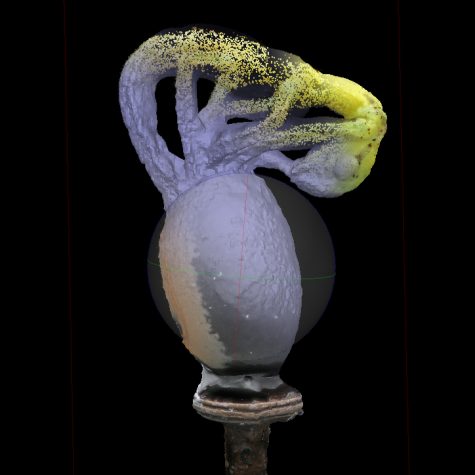 Hatching Stick Insect
 Internal Mold of a Turretellid Gastropod: Fossil
 Diffuser for Canon M-PE 65mm 1-5x
 Macropod PRO 3D & Micro Kit R5
 Turtledove Diffusers: Canon MT-24 EX Twin Lite Flash
 Ruby-throated Hummingbird Tail Feather: 3D Model
 Diffuser for Mitutoyo M Plan APO Objectives
 Whole Drawer Digitization 3rd Axes Conversion