 Macropod PRO 3D R5 (Excludes 7.5-100x Objectives)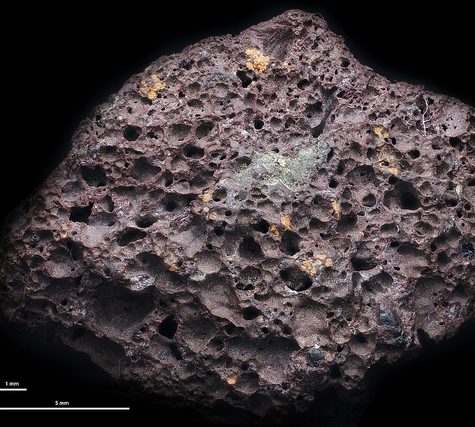
Vesicular Basalt Ah-ah


Tephra is fragmental material produced by a volcanic eruption regardless of composition, fragment size or emplacement mechanism.[1]
Volcanologists also refer to airborne fragments as pyroclasts. Once clasts have fallen to the ground they remain as tephra unless hot enough to fuse together into pyroclastic rock or tuff.

Tephra is fragmental material produced by a volcanic eruption regardless of composition, fragment size or emplacement mechanism.[1]
Volcanologists also refer to airborne fragments as pyroclasts. Once clasts have fallen to the ground they remain as tephra unless hot enough to fuse together into pyroclastic rock or tuff.

Tephra is fragmental material produced by a volcanic eruption regardless of composition, fragment size or emplacement mechanism.[1]
Volcanologists also refer to airborne fragments as pyroclasts. Once clasts have fallen to the ground they remain as tephra unless hot enough to fuse together into pyroclastic rock or tuff.

Tephra is fragmental material produced by a volcanic eruption regardless of composition, fragment size or emplacement mechanism.[1]
Volcanologists also refer to airborne fragments as pyroclasts. Once clasts have fallen to the ground they remain as tephra unless hot enough to fuse together into pyroclastic rock or tuff.

Tephra is fragmental material produced by a volcanic eruption regardless of composition, fragment size or emplacement mechanism.[1]
Volcanologists also refer to airborne fragments as pyroclasts. Once clasts have fallen to the ground they remain as tephra unless hot enough to fuse together into pyroclastic rock or tuff.
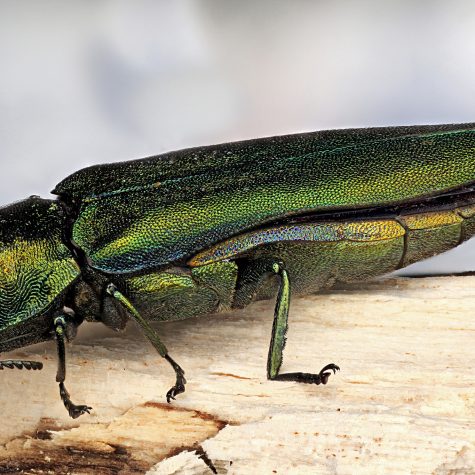
Agrilus planipennis, commonly known as the emerald ash borer is a green jewel beetle native to eastern Asia that feeds on ash species. In its native range, it is typically found at low densities and is not considered a significant pest.

Sample provided by Max Barclay of the Natural History Museum in London and described by Stylianos Chatzimanolis of the University of Tennessee.
Darwinilus sedarisi is a species of rove beetle, the only species in the genus Darwinilus. It is named after Charles Darwin and David Sedaris. It is found in Argentina. A specimen of the beetle was collected by Charles Darwin in 1832 during the voyage of the HMS Beagle, but not formally named as a new species until 2014
Imaged at Entomology 2014 in Portland, OR.