
About Us | In The News | Testimonials | Blog
MISSION STATEMENT
Macroscopic Solutions provides cost effective imaging solutions for interdisciplinary scientific researchers that aid in the digital archiving of diverse specimens, enhance research, inspire discovery, and expose young minds to science..
OUR PRODUCT
Macroscopic Solutions sells the Macropod, an imaging technology that is ideal for documenting the research, discovery, and inventory of scientific materials.
OUR STORY
Macroscopic Solutions is a small business made up of scientific researchers that specialize in macroscopic and microscopic imaging techniques and technologies with a concentration in STEM related fields.
What does Macroscopic Solutions do?
Macroscopic Solutions provides products, services and support that are based on the photographic technique of Focus stacking. Our team is dedicated to improving the significance of focus stacking for the scientific and indiustrial communities by providing novel and elegant imaging solutions.
What Is Focus Stacking?
Focus Stacking is also known as focal plane merging and z-stacking. It’s a digital image processing technique which combines multiple images taken at different focus distances to give a resulting image with a greater depth of field (DOF) than any of the individual source images can possibly provide.
Why Is Focus Stacking Important?
Focus Stacking allows researchers and users to preserve details that are normally lost when using microscopes, stereoscopes, SEM’s and fluorescence. Focus Stacking records and preserves the object’s natural color, orientation and context in the form of a high-resolution image or movie.
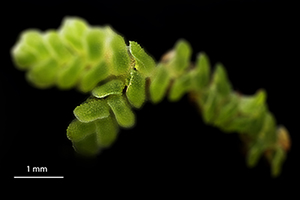
Standard image of an Azolla Fern, the smallest fern on Earth with massive green potential.

Focus stacked image of Azolla fern captured with the Macropod.
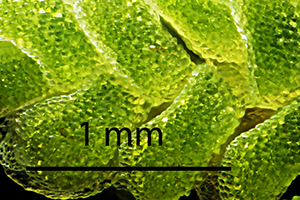
Zoom to focus stacked image of Azolla fern captured with the Macropod.
What Is Our Product?
Our Product, the Macropod, combines High- resolution digital cameras, powerful optics, industry leading precision hardware and novel software packages that provide our customers with images that are significant in research, digitization and education.
What Are Our Services?
We provide imaging services for our customers who want us to image their specimens for them.
What Do We Offer As Support?
We provide imaging support for focus stacking users who would like to improve their skills.

Image of Ixodes scapularis, Eastern Deer Tick, taken with the macropod for color and context.

Scanning Electron Micrograph of Ixodes scapularis, zoom to mouthparts.
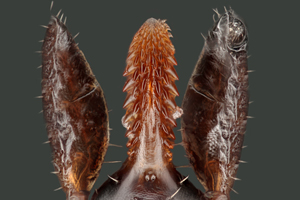
50x Macropod Image of Ixodes scapularis, zoom to mouthparts in full color.