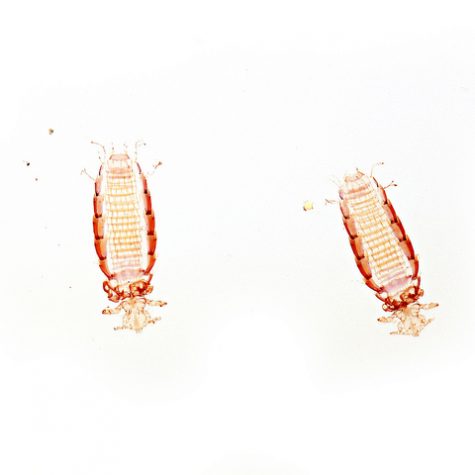
Chewing lice live among the hairs or feathers of their host and feed on skin and debris, while sucking lice pierce the host’s skin and feed on blood and other secretions. They usually spend their whole life on a single host, cementing their eggs, which are known as nits, to hairs or feathers. The eggs hatch into nymphs, which moult three times before becoming fully grown, a process that takes about four weeks.
Humans host three species of louse, the head louse, the body louse and the pubic louse. The body louse has the smallest genome of any known insect; it has been used as a model organism and has been the subject of much research.
Select options
This product has multiple variants. The options may be chosen on the product page
$19.00–$400.00Price range: $19.00 through $400.00
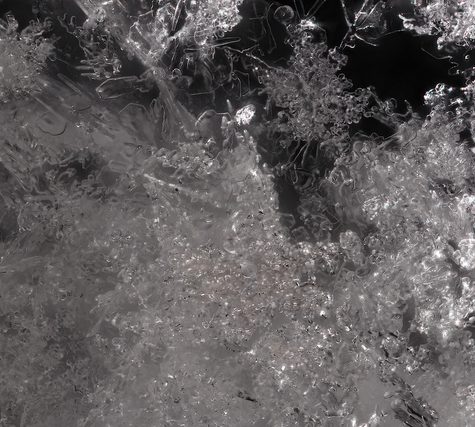
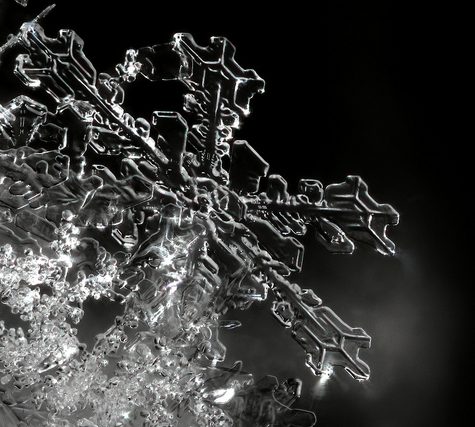
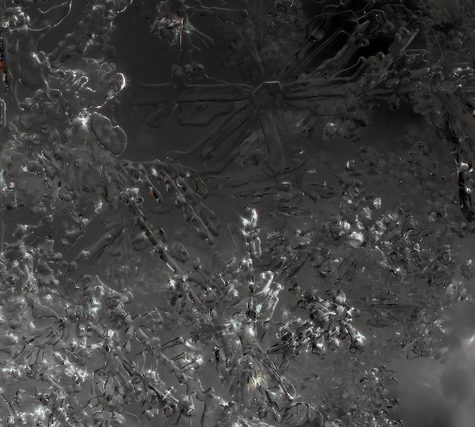
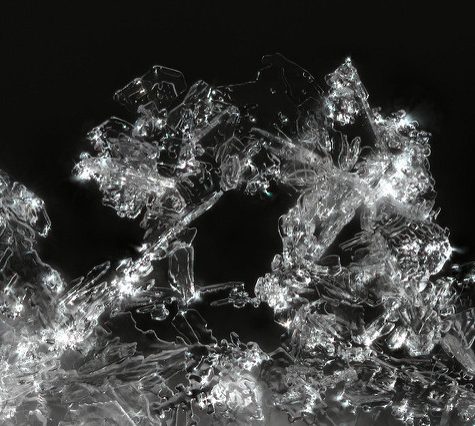
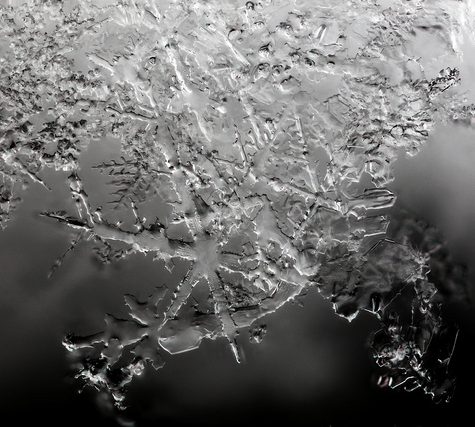
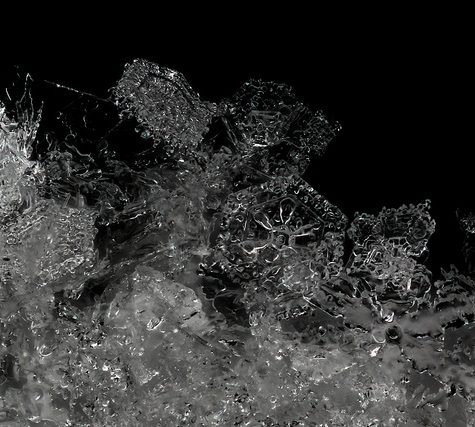
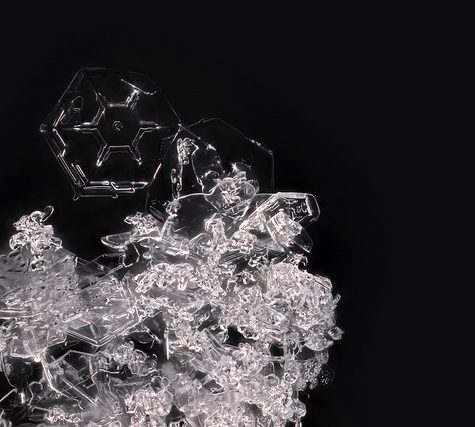
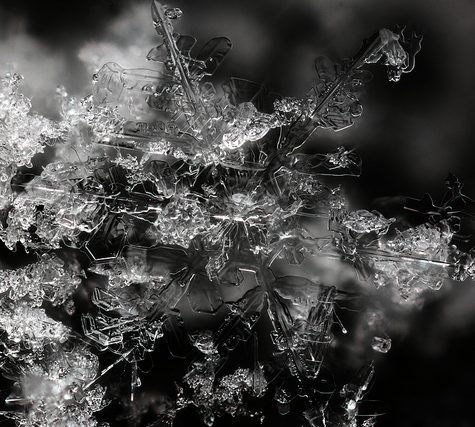
Snowflake from Coventry, CT
A snowflake is a single ice crystal that has achieved a sufficient size, and may have amalgamated with others, then falls through the Earth’s atmosphere as snow.[1][2][3] Each flake nucleates around a dust particle in supersaturated air masses by attracting supercooled cloud water droplets, which freeze and accrete in crystal form. Complex shapes emerge as the flake moves through differing temperature and humidity zones in the atmosphere, such that individual snowflakes differ in detail from one another, but may be categorized in eight broad classifications and at least 80 individual variants. The main constituent shapes for ice crystals, from which combinations may occur, are needle, column, plate and rime. Snowflakes appear white in color despite being made of clear ice. This is due to diffuse reflection of the whole spectrum of light by the small crystal facets.[4]
Select options
This product has multiple variants. The options may be chosen on the product page
$19.00–$400.00Price range: $19.00 through $400.00
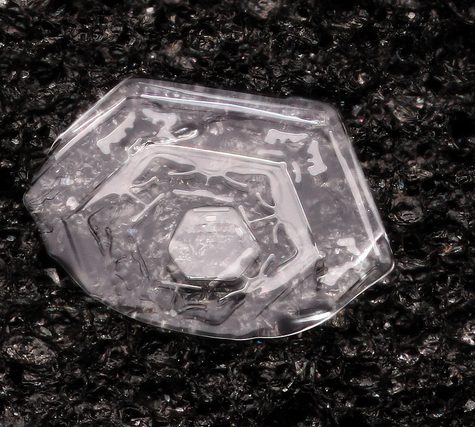
Snowflake from Coventry, CT
A snowflake is a single ice crystal that has achieved a sufficient size, and may have amalgamated with others, then falls through the Earth’s atmosphere as snow.[1][2][3] Each flake nucleates around a dust particle in supersaturated air masses by attracting supercooled cloud water droplets, which freeze and accrete in crystal form. Complex shapes emerge as the flake moves through differing temperature and humidity zones in the atmosphere, such that individual snowflakes differ in detail from one another, but may be categorized in eight broad classifications and at least 80 individual variants. The main constituent shapes for ice crystals, from which combinations may occur, are needle, column, plate and rime. Snowflakes appear white in color despite being made of clear ice. This is due to diffuse reflection of the whole spectrum of light by the small crystal facets.[4]
Select options
This product has multiple variants. The options may be chosen on the product page
$19.00–$400.00Price range: $19.00 through $400.00
Snowflake from Coventry, CT
A snowflake is a single ice crystal that has achieved a sufficient size, and may have amalgamated with others, then falls through the Earth’s atmosphere as snow.[1][2][3] Each flake nucleates around a dust particle in supersaturated air masses by attracting supercooled cloud water droplets, which freeze and accrete in crystal form. Complex shapes emerge as the flake moves through differing temperature and humidity zones in the atmosphere, such that individual snowflakes differ in detail from one another, but may be categorized in eight broad classifications and at least 80 individual variants. The main constituent shapes for ice crystals, from which combinations may occur, are needle, column, plate and rime. Snowflakes appear white in color despite being made of clear ice. This is due to diffuse reflection of the whole spectrum of light by the small crystal facets.[4]
Select options
This product has multiple variants. The options may be chosen on the product page
Chewing lice live among the hairs or feathers of their host and feed on skin and debris, while sucking lice pierce the host’s skin and feed on blood and other secretions. They usually spend their whole life on a single host, cementing their eggs, which are known as nits, to hairs or feathers. The eggs hatch into nymphs, which moult three times before becoming fully grown, a process that takes about four weeks.
Humans host three species of louse, the head louse, the body louse and the pubic louse. The body louse has the smallest genome of any known insect; it has been used as a model organism and has been the subject of much research.
Select options
This product has multiple variants. The options may be chosen on the product page
$19.00–$400.00Price range: $19.00 through $400.00
Snowflake from Coventry, CT
A snowflake is a single ice crystal that has achieved a sufficient size, and may have amalgamated with others, then falls through the Earth’s atmosphere as snow.[1][2][3] Each flake nucleates around a dust particle in supersaturated air masses by attracting supercooled cloud water droplets, which freeze and accrete in crystal form. Complex shapes emerge as the flake moves through differing temperature and humidity zones in the atmosphere, such that individual snowflakes differ in detail from one another, but may be categorized in eight broad classifications and at least 80 individual variants. The main constituent shapes for ice crystals, from which combinations may occur, are needle, column, plate and rime. Snowflakes appear white in color despite being made of clear ice. This is due to diffuse reflection of the whole spectrum of light by the small crystal facets.[4]
Select options
This product has multiple variants. The options may be chosen on the product page
$19.00–$400.00Price range: $19.00 through $400.00
Snowflake from Coventry, CT
A snowflake is a single ice crystal that has achieved a sufficient size, and may have amalgamated with others, then falls through the Earth’s atmosphere as snow.[1][2][3] Each flake nucleates around a dust particle in supersaturated air masses by attracting supercooled cloud water droplets, which freeze and accrete in crystal form. Complex shapes emerge as the flake moves through differing temperature and humidity zones in the atmosphere, such that individual snowflakes differ in detail from one another, but may be categorized in eight broad classifications and at least 80 individual variants. The main constituent shapes for ice crystals, from which combinations may occur, are needle, column, plate and rime. Snowflakes appear white in color despite being made of clear ice. This is due to diffuse reflection of the whole spectrum of light by the small crystal facets.[4]
Select options
This product has multiple variants. The options may be chosen on the product page
$19.00–$400.00Price range: $19.00 through $400.00
Snowflake from Coventry, CT
A snowflake is a single ice crystal that has achieved a sufficient size, and may have amalgamated with others, then falls through the Earth’s atmosphere as snow.[1][2][3] Each flake nucleates around a dust particle in supersaturated air masses by attracting supercooled cloud water droplets, which freeze and accrete in crystal form. Complex shapes emerge as the flake moves through differing temperature and humidity zones in the atmosphere, such that individual snowflakes differ in detail from one another, but may be categorized in eight broad classifications and at least 80 individual variants. The main constituent shapes for ice crystals, from which combinations may occur, are needle, column, plate and rime. Snowflakes appear white in color despite being made of clear ice. This is due to diffuse reflection of the whole spectrum of light by the small crystal facets.[4]
Select options
This product has multiple variants. The options may be chosen on the product page
$19.00–$400.00Price range: $19.00 through $400.00
Snowflake from Coventry, CT
A snowflake is a single ice crystal that has achieved a sufficient size, and may have amalgamated with others, then falls through the Earth’s atmosphere as snow.[1][2][3] Each flake nucleates around a dust particle in supersaturated air masses by attracting supercooled cloud water droplets, which freeze and accrete in crystal form. Complex shapes emerge as the flake moves through differing temperature and humidity zones in the atmosphere, such that individual snowflakes differ in detail from one another, but may be categorized in eight broad classifications and at least 80 individual variants. The main constituent shapes for ice crystals, from which combinations may occur, are needle, column, plate and rime. Snowflakes appear white in color despite being made of clear ice. This is due to diffuse reflection of the whole spectrum of light by the small crystal facets.[4]
Select options
This product has multiple variants. The options may be chosen on the product page
$19.00–$400.00Price range: $19.00 through $400.00
Snowflake from Coventry, CT
A snowflake is a single ice crystal that has achieved a sufficient size, and may have amalgamated with others, then falls through the Earth’s atmosphere as snow.[1][2][3] Each flake nucleates around a dust particle in supersaturated air masses by attracting supercooled cloud water droplets, which freeze and accrete in crystal form. Complex shapes emerge as the flake moves through differing temperature and humidity zones in the atmosphere, such that individual snowflakes differ in detail from one another, but may be categorized in eight broad classifications and at least 80 individual variants. The main constituent shapes for ice crystals, from which combinations may occur, are needle, column, plate and rime. Snowflakes appear white in color despite being made of clear ice. This is due to diffuse reflection of the whole spectrum of light by the small crystal facets.[4]
Select options
This product has multiple variants. The options may be chosen on the product page
$19.00–$400.00Price range: $19.00 through $400.00
Snowflake from Coventry, CT
A snowflake is a single ice crystal that has achieved a sufficient size, and may have amalgamated with others, then falls through the Earth’s atmosphere as snow.[1][2][3] Each flake nucleates around a dust particle in supersaturated air masses by attracting supercooled cloud water droplets, which freeze and accrete in crystal form. Complex shapes emerge as the flake moves through differing temperature and humidity zones in the atmosphere, such that individual snowflakes differ in detail from one another, but may be categorized in eight broad classifications and at least 80 individual variants. The main constituent shapes for ice crystals, from which combinations may occur, are needle, column, plate and rime. Snowflakes appear white in color despite being made of clear ice. This is due to diffuse reflection of the whole spectrum of light by the small crystal facets.[4]
Select options
This product has multiple variants. The options may be chosen on the product page
$19.00–$400.00Price range: $19.00 through $400.00
Cricket
Grasshoppers are insects of the suborderCaelifera within the order Orthoptera, which includes crickets and their allies in the other suborder Ensifera. They are likely the oldest living group of chewing herbivorous insects, dating back to the early Triassicaround 250 million years ago. Grasshoppers are typically ground-dwelling insects with powerful hind legs which enable them to escape from threats by leaping vigorously. They are hemimetabolous insects (they do not undergo complete metamorphosis) which hatch from an egg into a nymph or “hopper” which undergoes five moults, becoming more similar to the adult insect at each developmental stage. At high population densities and under certain environmental conditions, some grasshopper species can change colour and behaviour and form swarms. Under these circumstances they are known as locusts.
Select options
This product has multiple variants. The options may be chosen on the product page
$19.00–$400.00Price range: $19.00 through $400.00
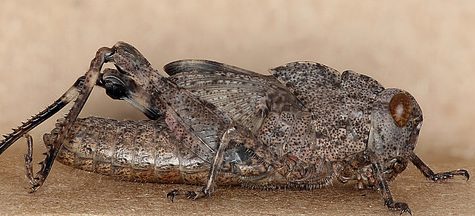
Grasshopper, Tolland CT
Grasshoppers are insects of the suborderCaelifera within the order Orthoptera, which includes crickets and their allies in the other suborder Ensifera. They are likely the oldest living group of chewing herbivorous insects, dating back to the early Triassicaround 250 million years ago. Grasshoppers are typically ground-dwelling insects with powerful hind legs which enable them to escape from threats by leaping vigorously. They are hemimetabolous insects (they do not undergo complete metamorphosis) which hatch from an egg into a nymph or “hopper” which undergoes five moults, becoming more similar to the adult insect at each developmental stage. At high population densities and under certain environmental conditions, some grasshopper species can change colour and behaviour and form swarms. Under these circumstances they are known as locusts.
Select options
This product has multiple variants. The options may be chosen on the product page
$19.00–$400.00Price range: $19.00 through $400.00
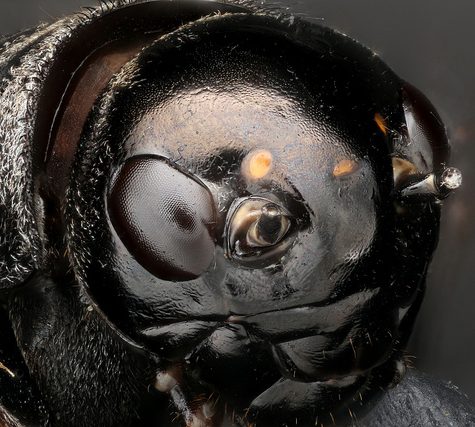
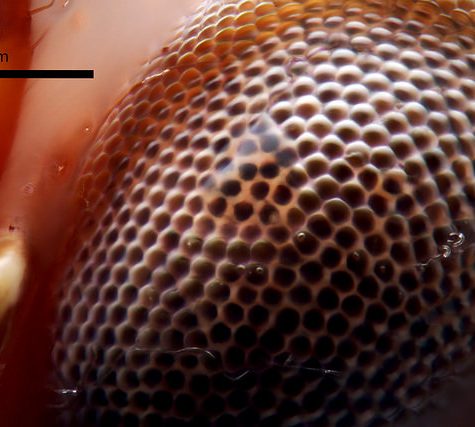
Katydid Eye, Coventry CT
Insects in the familyTettigoniidae are commonly called bush crickets[2] (in the UK), katydids (in the USA), or long-horned grasshoppers (mostly obsolete). More than 6,400 species are known. Part of the suborder Ensifera, Tettigoniidae is the only family in the superfamily Tettigonioidea.
Primarily nocturnal in habit, with strident mating calls, many katydids exhibit mimicryand camouflage, commonly with shapes and colors similar to leaves.[3]
Select options
This product has multiple variants. The options may be chosen on the product page
$19.00–$400.00Price range: $19.00 through $400.00
Katydid Wing, Coventry CT
Insects in the familyTettigoniidae are commonly called bush crickets[2] (in the UK), katydids (in the USA), or long-horned grasshoppers (mostly obsolete). More than 6,400 species are known. Part of the suborder Ensifera, Tettigoniidae is the only family in the superfamily Tettigonioidea.
Primarily nocturnal in habit, with strident mating calls, many katydids exhibit mimicryand camouflage, commonly with shapes and colors similar to leaves.[3]
Select options
This product has multiple variants. The options may be chosen on the product page