

Abstract Hentzia
Hentzia is a genus of the spider family Salticidae (jumping spiders).
Hentzia is a genus of the spider family Salticidae (jumping spiders).
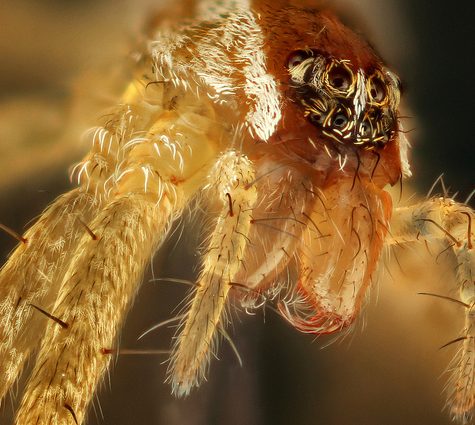
Spiders (order Araneae) are air-breathing arthropods that have eight legs and chelicerae with fangs that inject venom. They are the largest order of arachnids and rank seventh in total species diversity among all other orders of organisms.[2] Spiders are found worldwide on every continent except for Antarctica, and have become established in nearly every habitat with the exceptions of air and sea colonization. As of November 2015, at least 45,700 spider species, and 113 families have been recorded by taxonomists.[1] However, there has been dissension within the scientific community as to how all these families should be classified, as evidenced by the over 20 different classifications that have been proposed since 1900.[3]
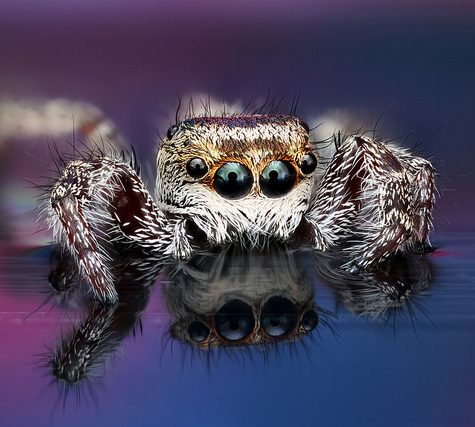
Phidippus princeps is a rare species of jumping spider found in Canada and the United States. These jumping spiders’ vision exceeds by a factor of ten that of dragonflies, which have the best vision among insects.
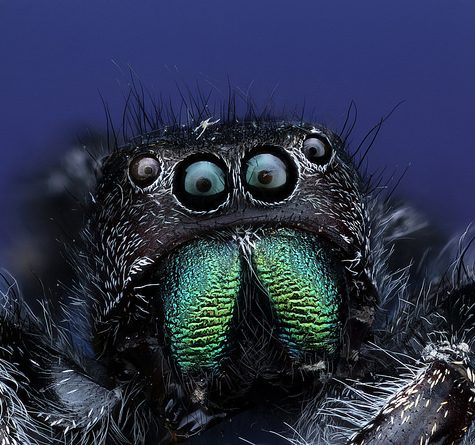
The jumping spider family (Salticidae) contains over 600 described genera and more than 5800 described species,[1] making it the largest family of spiders with about 13% of all species.[2] Jumping spiders have some of the best vision among arthropods and use it in courtship, hunting, and navigation. Although they normally move unobtrusively and fairly slowly, most species are capable of very agile jumps, notably when hunting, but sometimes in response to sudden threats or crossing long gaps. Both their book lungsand tracheal system are well-developed, and they use both systems (bimodal breathing). Jumping spiders are generally recognized by their eye pattern. All jumping spiders have four pairs of eyes, with the anterior median pair being particularly large.
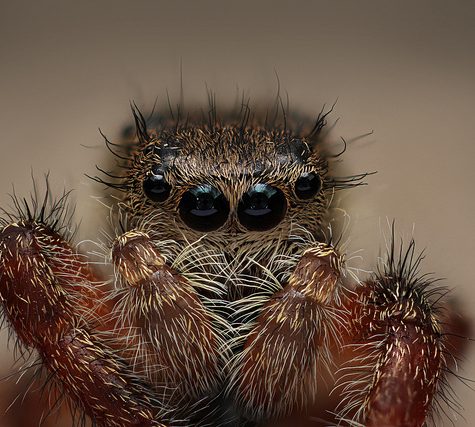
The jumping spider family (Salticidae) contains over 600 described genera and more than 5800 described species,[1] making it the largest family of spiders with about 13% of all species.[2] Jumping spiders have some of the best vision among arthropods and use it in courtship, hunting, and navigation. Although they normally move unobtrusively and fairly slowly, most species are capable of very agile jumps, notably when hunting, but sometimes in response to sudden threats or crossing long gaps. Both their book lungsand tracheal system are well-developed, and they use both systems (bimodal breathing). Jumping spiders are generally recognized by their eye pattern. All jumping spiders have four pairs of eyes, with the anterior median pair being particularly large.
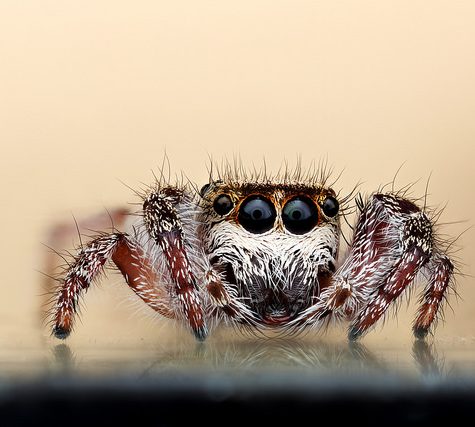
Phidippus princeps is a rare species of jumping spider found in Canada and the United States. These jumping spiders’ vision exceeds by a factor of ten that of dragonflies, which have the best vision among insects.
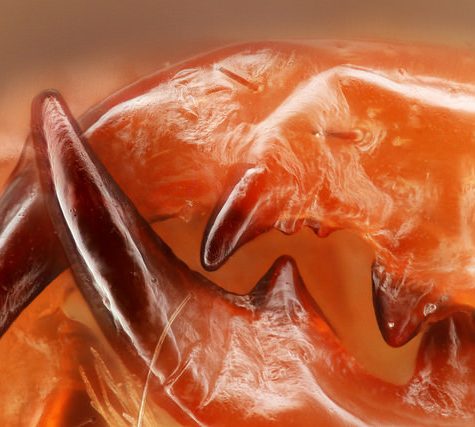
Scorpions are predatory arachnids of the order Scorpiones. They have eight legs[1] and are easily recognized by the pair of grasping pedipalps and the narrow, segmented tail, often carried in a characteristic forward curve over the back, ending with a venomous stinger. Scorpions range in size from 9 mm / 0.3 in. (Typhlochactas mitchelli) to 23 cm / 9 in. (Heterometrus swammerdami).[2]
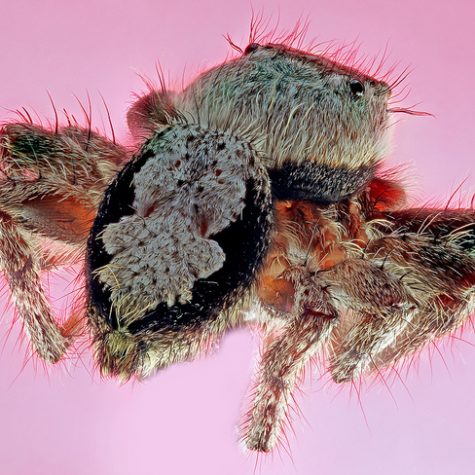
The jumping spider family (Salticidae) contains over 600 described genera and more than 5800 described species,[1] making it the largest family of spiders with about 13% of all species.[2] Jumping spiders have some of the best vision among arthropods and use it in courtship, hunting, and navigation. Although they normally move unobtrusively and fairly slowly, most species are capable of very agile jumps, notably when hunting, but sometimes in response to sudden threats or crossing long gaps. Both their book lungsand tracheal system are well-developed, and they use both systems (bimodal breathing). Jumping spiders are generally recognized by their eye pattern. All jumping spiders have four pairs of eyes, with the anterior median pair being particularly large.
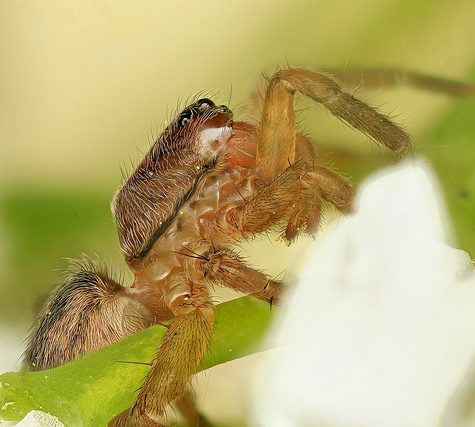
Wolf spiders are members of the family Lycosidae, from the Ancient Greek word “λύκος” meaning “wolf”. They are robust and agile hunters with excellent eyesight. They live mostly in solitude and hunt alone, and do not spin webs. Some are opportunistic hunters pouncing upon prey as they find it or even chasing it over short distances. Some will wait for passing prey in or near the mouth of a burrow.
Wolf spiders resemble nursery web spiders (family Pisauridae), but wolf spiders carry their egg sacs by attaching them to their spinnerets (Pisauridae carry their egg sacs with their chelicerae and pedipalps). Two of the wolf spider’s eight eyes are large and prominent, which distinguishes them from the nursery web spiders whose eyes are all of approximately equal size. This can also help distinguish them from grass spiders.
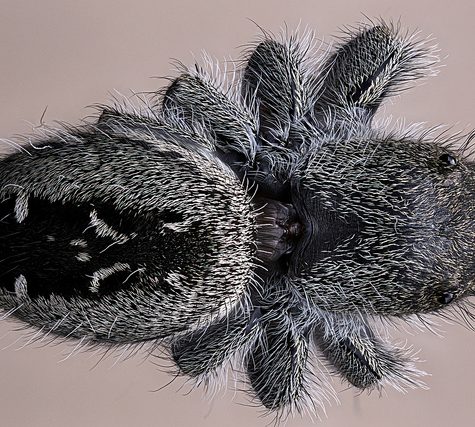
The jumping spider family (Salticidae) contains over 600 described genera and more than 5800 described species,[1] making it the largest family of spiders with about 13% of all species.[2] Jumping spiders have some of the best vision among arthropods and use it in courtship, hunting, and navigation. Although they normally move unobtrusively and fairly slowly, most species are capable of very agile jumps, notably when hunting, but sometimes in response to sudden threats or crossing long gaps. Both their book lungsand tracheal system are well-developed, and they use both systems (bimodal breathing). Jumping spiders are generally recognized by their eye pattern. All jumping spiders have four pairs of eyes, with the anterior median pair being particularly large.
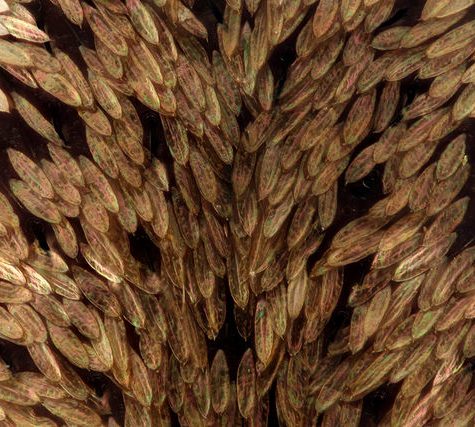
The jumping spider family (Salticidae) contains over 600 described genera and more than 5800 described species,[1] making it the largest family of spiders with about 13% of all species.[2] Jumping spiders have some of the best vision among arthropods and use it in courtship, hunting, and navigation. Although they normally move unobtrusively and fairly slowly, most species are capable of very agile jumps, notably when hunting, but sometimes in response to sudden threats or crossing long gaps. Both their book lungsand tracheal system are well-developed, and they use both systems (bimodal breathing). Jumping spiders are generally recognized by their eye pattern. All jumping spiders have four pairs of eyes, with the anterior median pair being particularly large.
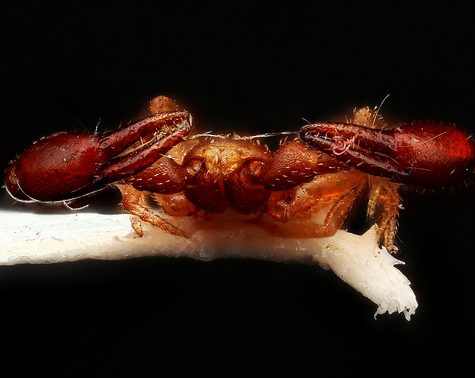
A pseudoscorpion, also known as a false scorpion or book scorpion, is an arachnidbelonging to the order Pseudoscorpiones, also known as Pseudoscorpionida or Chelonethida.
Pseudoscorpions are generally beneficial to humans since they prey on clothes moth larvae, carpet beetle larvae, booklice, ants, mites, and small flies. They are tiny and inoffensive, and are rarely seen due to their small size, despite being common in many environments. Pseudoscorpions often carry out phoresy, a form of commensalism in which one organism uses another for the purpose of transport.
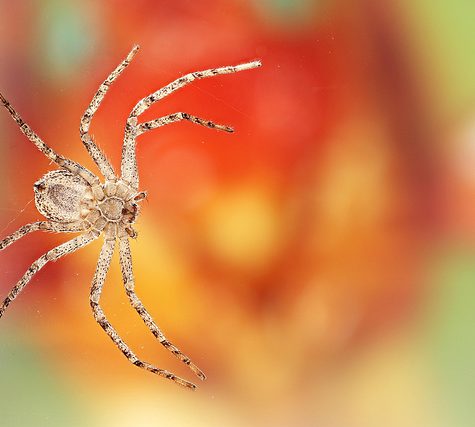
Wolf spiders are members of the family Lycosidae, from the Ancient Greek word “λύκος” meaning “wolf”. They are robust and agile hunters with excellent eyesight. They live mostly in solitude and hunt alone, and do not spin webs. Some are opportunistic hunters pouncing upon prey as they find it or even chasing it over short distances. Some will wait for passing prey in or near the mouth of a burrow.
Wolf spiders resemble nursery web spiders (family Pisauridae), but wolf spiders carry their egg sacs by attaching them to their spinnerets (Pisauridae carry their egg sacs with their chelicerae and pedipalps). Two of the wolf spider’s eight eyes are large and prominent, which distinguishes them from the nursery web spiders whose eyes are all of approximately equal size. This can also help distinguish them from grass spiders.
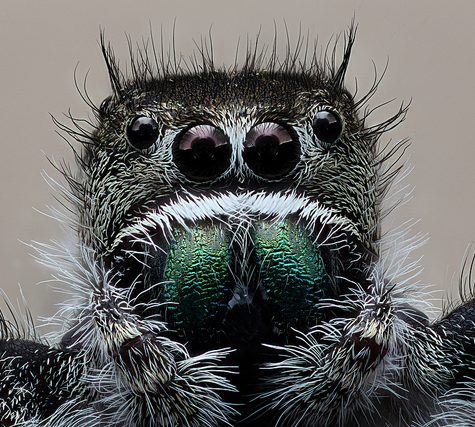
The jumping spider family (Salticidae) contains over 600 described genera and more than 5800 described species,[1] making it the largest family of spiders with about 13% of all species.[2] Jumping spiders have some of the best vision among arthropods and use it in courtship, hunting, and navigation. Although they normally move unobtrusively and fairly slowly, most species are capable of very agile jumps, notably when hunting, but sometimes in response to sudden threats or crossing long gaps. Both their book lungsand tracheal system are well-developed, and they use both systems (bimodal breathing). Jumping spiders are generally recognized by their eye pattern. All jumping spiders have four pairs of eyes, with the anterior median pair being particularly large.
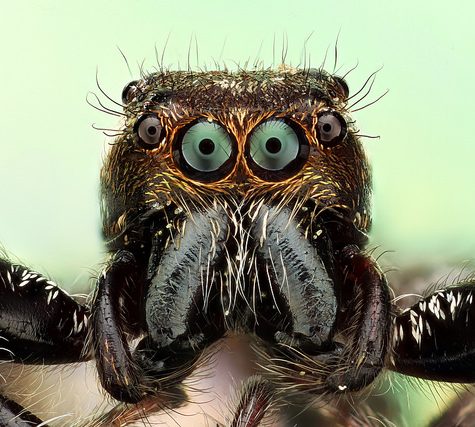
The jumping spider family (Salticidae) contains over 600 described genera and more than 5800 described species,[1] making it the largest family of spiders with about 13% of all species.[2] Jumping spiders have some of the best vision among arthropods and use it in courtship, hunting, and navigation. Although they normally move unobtrusively and fairly slowly, most species are capable of very agile jumps, notably when hunting, but sometimes in response to sudden threats or crossing long gaps. Both their book lungsand tracheal system are well-developed, and they use both systems (bimodal breathing). Jumping spiders are generally recognized by their eye pattern. All jumping spiders have four pairs of eyes, with the anterior median pair being particularly large.

The jumping spider family (Salticidae) contains over 600 described genera and more than 5800 described species,[1] making it the largest family of spiders with about 13% of all species.[2] Jumping spiders have some of the best vision among arthropods and use it in courtship, hunting, and navigation. Although they normally move unobtrusively and fairly slowly, most species are capable of very agile jumps, notably when hunting, but sometimes in response to sudden threats or crossing long gaps. Both their book lungsand tracheal system are well-developed, and they use both systems (bimodal breathing). Jumping spiders are generally recognized by their eye pattern. All jumping spiders have four pairs of eyes, with the anterior median pair being particularly large.
Macroscopic Solutions will resume shipping on March 5, 2026 while our staff attends PDAC in Toronto this week, thank you for your patience. Dismiss