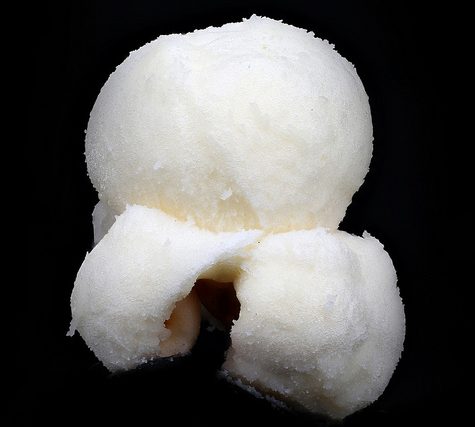
Popcorn is a variety of cornkernel, which forcefully expands and puffs up when heated.
A popcorn kernel’s strong hull contains the seed’s hard, starchy endosperm with 14-20% moisture, which turns to steam as the kernel is heated. The pressure continues building until it exceeds the hull’s ability to contain it. The kernel ruptures and forcefully expands, allowing the contents to expand, cool, and finally set in a popcorn puff 2 to 5 times the size of the original kernel.[1]
Select options
This product has multiple variants. The options may be chosen on the product page
$19.00–$400.00Price range: $19.00 through $400.00
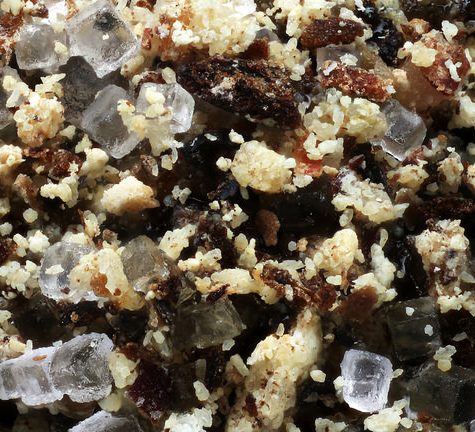
Salt and Pepper
Salt and pepper is the common name for edible salt and black pepper, a traditionally paired set of condiments found on dining tables where European-style food is eaten. The pairing of salt and pepper as table condiments dates to seventeenth-century French cuisine, which considered pepper the only spice (as distinct from herbs such as fines herbes) which did not overpower the true taste of food.[1] They are typically found in a set of salt and pepper shakers, often a matched set; however, salt and pepper are typically maintained in separate shakers.
Select options
This product has multiple variants. The options may be chosen on the product page
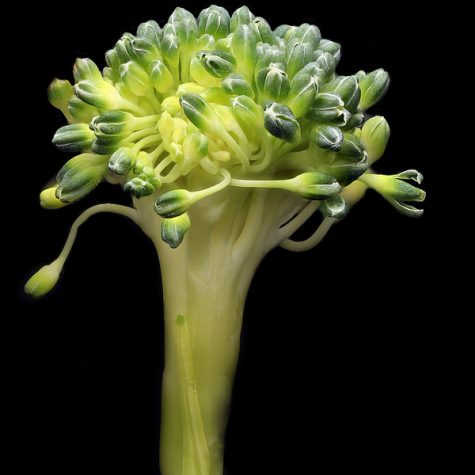
The word broccoli comes from the Italian plural of broccolo, which means “the flowering crest of a cabbage“, and is the diminutive form of brocco, meaning “small nail” or “sprout”.[3] Broccoli is often boiled or steamed but may be eaten raw.[4]
Broccoli is classified in the Italica cultivar group of the species Brassica oleracea. Broccoli has large flower heads, usually green in color, arranged in a tree-like structure branching out from a thick, edible stalk. The mass of flower heads is surrounded by leaves. Broccoli resembles cauliflower, which is a different cultivar group of the same species.
Broccoli is a result of careful breeding of cultivated Brassica crops in the northern Mediterranean starting in about the 6th century BC.[5] Since the time of the Roman Empire, broccoli has been considered a uniquely valuable food among Italians.[6]Broccoli was brought to England from Antwerp in the mid-18th century by Peter Scheemakers.[7] Broccoli was first introduced to the United States by Southern Italian immigrants, but did not become widely popular until the 1920s.[8]
Select options
This product has multiple variants. The options may be chosen on the product page
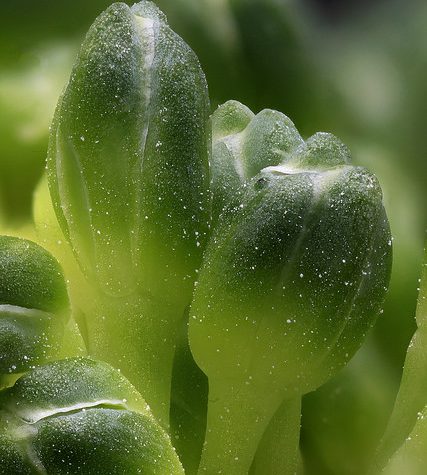
The word broccoli comes from the Italian plural of broccolo, which means “the flowering crest of a cabbage“, and is the diminutive form of brocco, meaning “small nail” or “sprout”.[3] Broccoli is often boiled or steamed but may be eaten raw.[4]
Broccoli is classified in the Italica cultivar group of the species Brassica oleracea. Broccoli has large flower heads, usually green in color, arranged in a tree-like structure branching out from a thick, edible stalk. The mass of flower heads is surrounded by leaves. Broccoli resembles cauliflower, which is a different cultivar group of the same species.
Broccoli is a result of careful breeding of cultivated Brassica crops in the northern Mediterranean starting in about the 6th century BC.[5] Since the time of the Roman Empire, broccoli has been considered a uniquely valuable food among Italians.[6]Broccoli was brought to England from Antwerp in the mid-18th century by Peter Scheemakers.[7] Broccoli was first introduced to the United States by Southern Italian immigrants, but did not become widely popular until the 1920s.[8]
Select options
This product has multiple variants. The options may be chosen on the product page