Showing 1–16 of 48 resultsSorted by price: high to low
Select options
This product has multiple variants. The options may be chosen on the product page
$19.00–$400.00Price range: $19.00 through $400.00
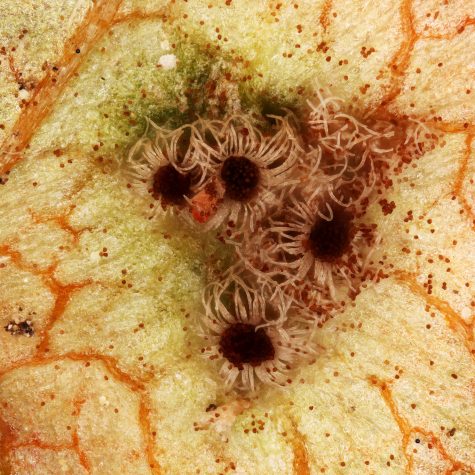
Gymnosporangium juniperi-virginianae, Cedar Apple Rust Fungus on Apple Tree Leaf, Storrs, CT 8.2.18, 10x (Back-Side)
Gymnosporangium juniperi-virginianae is a plant pathogen that causes cedar-apple rust.[1] In virtually any location where apples or crabapples (Malus) and Eastern red-cedar (Juniperus virginiana) coexist, cedar apple rust can be a destructive or disfiguring disease on both the apples and cedars. Quince and hawthorn are the most common host and many species of juniper can substitute for the Eastern red cedars.
Select options
This product has multiple variants. The options may be chosen on the product page
$19.00–$400.00Price range: $19.00 through $400.00
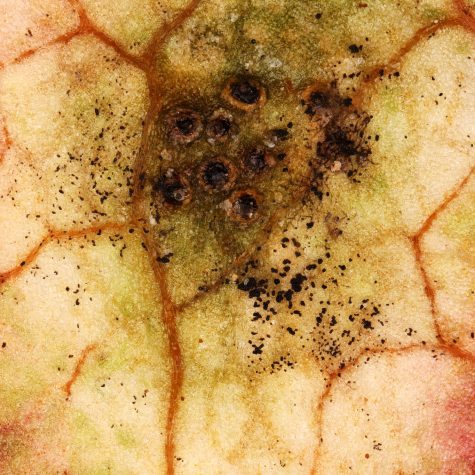
Gymnosporangium juniperi-virginianae, Cedar Apple Rust Fungus on Apple Tree Leaf, Storrs, CT 8.2.18, 10x (Front-Side)
Gymnosporangium juniperi-virginianae is a plant pathogen that causes cedar-apple rust.[1] In virtually any location where apples or crabapples (Malus) and Eastern red-cedar (Juniperus virginiana) coexist, cedar apple rust can be a destructive or disfiguring disease on both the apples and cedars. Quince and hawthorn are the most common host and many species of juniper can substitute for the Eastern red cedars.
Select options
This product has multiple variants. The options may be chosen on the product page
$19.00–$400.00Price range: $19.00 through $400.00
Dewey Millipede on Unknown Tree Bud Scale Bar
Myriapoda is a subphylum of arthropods containing millipedes, centipedes, and others. The group contains over 16,000 species, most of which are terrestrial.[2]Although their name suggests they have myriad (10,000) legs, myriapods range from having up to 750 legs (the millipede Illacme plenipes)[3]to having fewer than ten legs.
Select options
This product has multiple variants. The options may be chosen on the product page
Select options
This product has multiple variants. The options may be chosen on the product page
$19.00–$400.00Price range: $19.00 through $400.00
Engorged Dog Tick
Dermacentor variabilis, also known as the American dog tick or wood tick, is a species of tick that is known to carry bacteria responsible for several diseases in humans, including Rocky Mountain spotted fever and tularemia (Francisella tularensis). It is one of the most well-known hard ticks. Diseases are spread when it sucks blood from the host, which could take several days for the host to experience some symptoms.
Select options
This product has multiple variants. The options may be chosen on the product page
Select options
This product has multiple variants. The options may be chosen on the product page
$19.00–$400.00Price range: $19.00 through $400.00
Engorged Dog Tick
Dermacentor variabilis, also known as the American dog tick or wood tick, is a species of tick that is known to carry bacteria responsible for several diseases in humans, including Rocky Mountain spotted fever and tularemia (Francisella tularensis). It is one of the most well-known hard ticks. Diseases are spread when it sucks blood from the host, which could take several days for the host to experience some symptoms.
Select options
This product has multiple variants. The options may be chosen on the product page
Select options
This product has multiple variants. The options may be chosen on the product page
$19.00–$400.00Price range: $19.00 through $400.00
Dewey Millipede on Unknown Tree Bud
Myriapoda is a subphylum of arthropods containing millipedes, centipedes, and others. The group contains over 16,000 species, most of which are terrestrial.[2]Although their name suggests they have myriad (10,000) legs, myriapods range from having up to 750 legs (the millipede Illacme plenipes)[3]to having fewer than ten legs.
Select options
This product has multiple variants. The options may be chosen on the product page
Select options
This product has multiple variants. The options may be chosen on the product page
$19.00–$400.00Price range: $19.00 through $400.00
Engorged Dog Tick
Dermacentor variabilis, also known as the American dog tick or wood tick, is a species of tick that is known to carry bacteria responsible for several diseases in humans, including Rocky Mountain spotted fever and tularemia (Francisella tularensis). It is one of the most well-known hard ticks. Diseases are spread when it sucks blood from the host, which could take several days for the host to experience some symptoms.
Select options
This product has multiple variants. The options may be chosen on the product page
$19.00–$400.00Price range: $19.00 through $400.00
Pseudoscorpion
A pseudoscorpion, also known as a false scorpion or book scorpion, is an arachnidbelonging to the order Pseudoscorpiones, also known as Pseudoscorpionida or Chelonethida.
Pseudoscorpions are generally beneficial to humans since they prey on clothes moth larvae, carpet beetle larvae, booklice, ants, mites, and small flies. They are tiny and inoffensive, and are rarely seen due to their small size, despite being common in many environments. Pseudoscorpions often carry out phoresy, a form of commensalism in which one organism uses another for the purpose of transport.
Select options
This product has multiple variants. The options may be chosen on the product page
Select options
This product has multiple variants. The options may be chosen on the product page
$19.00–$400.00Price range: $19.00 through $400.00
Wolf Spider
Wolf spiders are members of the familyLycosidae, from the Ancient Greek word “λύκος” meaning “wolf”. They are robust and agile hunters with excellent eyesight. They live mostly in solitude and hunt alone, and do not spin webs. Some are opportunistic hunters pouncing upon prey as they find it or even chasing it over short distances. Some will wait for passing prey in or near the mouth of a burrow.
Select options
This product has multiple variants. The options may be chosen on the product page
$19.00–$400.00Price range: $19.00 through $400.00
Phidippus princeps
Phidippus princeps is a rare species of jumping spider found in Canada and the United States. These jumping spiders’ vision exceeds by a factor of ten that of dragonflies, which have the best vision among insects.
Select options
This product has multiple variants. The options may be chosen on the product page
Ant mimicry or myrmecomorphy is mimicry of ants by other organisms. Ants are abundant all over the world, and potential predators that rely on vision to identify their prey, such as birds and wasps, normally avoid them, because they are either unpalatable or aggressive. Some arthropods mimic ants to escape predation (protective mimicry), while others mimic ants anatomically and behaviourally to hunt ants (aggressive mimicry).[1]
To overcome ants’ powerful defences, mimics may imitate ants chemically (Wasmannian mimicry) with ant-like pheromones, visually (as in Batesian mimicry, though the purpose may also be aggressive mimicry), or by copying microstructure for tactile mimicry.[2]